The 12 Best French Language Podcasts for Learners in 2026
Finding the right French language learning podcasts can feel overwhelming. With many options available, the real challenge is not a lack of resources, but a lack of strategy.
We have curated and categorized 12 of the most effective podcasts, providing direct links and practical insights for each one. You will learn not just what to listen to, but how to integrate it into a powerful study routine.
So instead of aimless listening, this guide provides a clear roadmap to help you select, process, and master French audio content, building the real-world comprehension skills you need to become confident and articulate.
1. InnerFrench
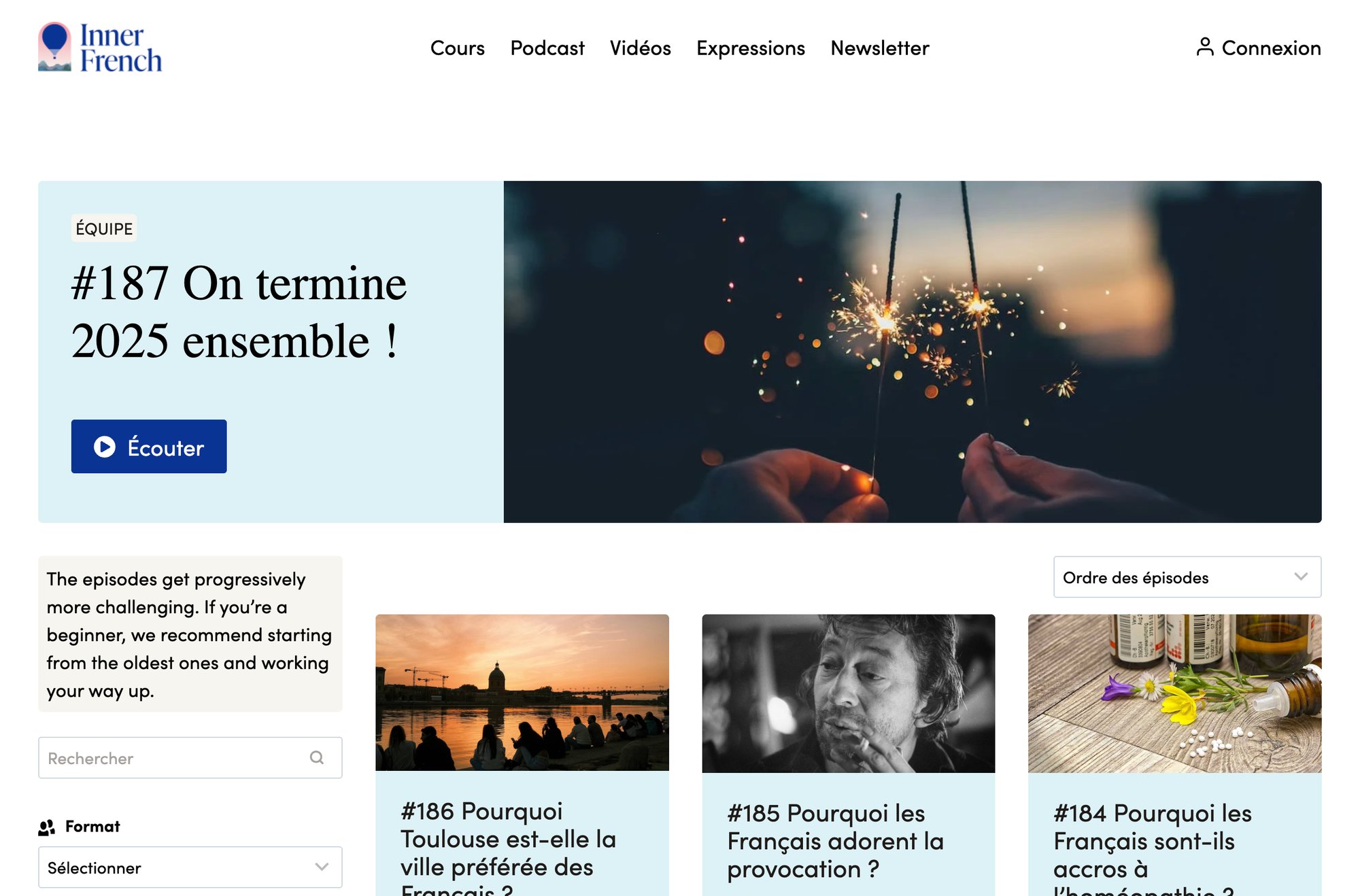
If you have studied French for a while but still freeze up when natives speak, InnerFrench is widely considered the "Holy Grail" of intermediate listening.
Hosted by Hugo Cotton, a French teacher who understands the frustration of the "intermediate plateau," this podcast is designed to be the bridge between robotic textbook audio and full-speed French radio.
The Vibe
Hugo has a calm, reassuring presence. He speaks naturally but articulates clearly and avoids overly complicated sentence structures. The topics are never boring grammar drills; instead, he discusses French society, psychology, history, and current events (like "Why are the French always on strike?" or "The history of French cinema"). It feels like an intellectual conversation with a patient friend.
Why It’s a Top Pick
What sets this podcast apart is that it treats you like an intelligent adult, not a child.
Comprehensible Input: Hugo creates content that is just above your current level. You understand the context, which helps you acquire new vocabulary naturally without needing a dictionary for every word.
Cultural Insight: You aren't just learning the language; you are learning about France. He tackles stereotypes and cultural nuances that helps you understand the French mindset.
Transcripts: Every episode comes with a transcript (often free or low cost), which is essential for verifying what you heard and studying new expressions.
Who Is It For?
Level: Intermediate (B1-B2)
Dialect: Standard Metropolitan French (France)
Format: Solo host, educational but engaging.
Listen here: Visit the InnerFrench Website
2. Lenguia
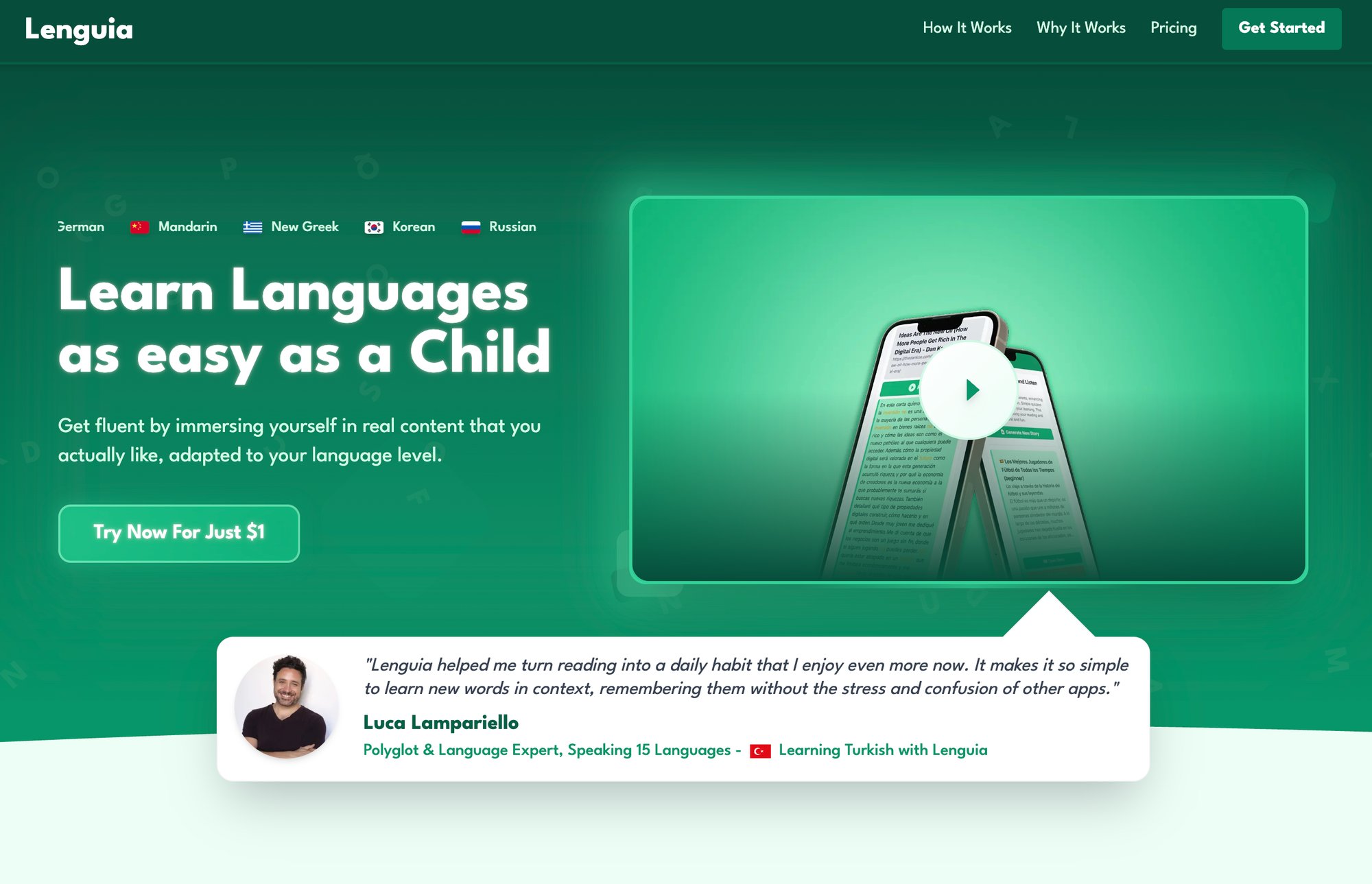
Though not a podcast itself, it enhances every French podcast by providing interactive transcripts and explanations.
Lenguia is a comprehensive, AI-powered platform designed to transform authentic content, including french language learning podcasts, into effective study materials. It is built on the principles of comprehensible input, making it an exceptional tool for intermediate (A2+) and advanced learners who want to move beyond textbooks and build real-world fluency. Instead of isolated vocabulary and grammar drills, Lenguia helps you acquire French naturally by engaging with content you find genuinely interesting.
The platform’s standout feature is its ability to import and simplify content. You can search for any podcast or even upload your own audio files. The platform then creates interactive transcripts where every word becomes clickable for instant definitions, and you can generate multimedia flashcards from any word or sentence with a single click. This turns passive listening into an active, measurable learning experience. If you want more than just listening, you can also simplify entire books to your level or use the interactive journal where you get immediate feedback on every sentence you write.
Key Strengths and Use Cases
Lenguia excels at creating a sustainable learning loop. You can listen to a French podcast, import the transcript to read and understand every word, and then use the integrated spaced repetition system (SRS) to master new vocabulary. The SRS is context-based, reintroducing words in new sentences to ensure you learn their usage, not just their definition.
For a focused study session, try this workflow:
Find a Podcast: Choose an episode of a podcast like Transfert or InnerFrench.
Generate the Transcript: Lenguia automatically creates a clickable version of the transcript that is synced to the audio.
Active Reading & Listening: Read along while you listen, clicking on unknown words to see definitions and create flashcards.
Review with SRS: Lenguia will automatically schedule your new flashcards for review, reinforcing retention.
A single subscription provides access to dozens of languages, making it a powerful asset for serious language learners.
3. Piece of French
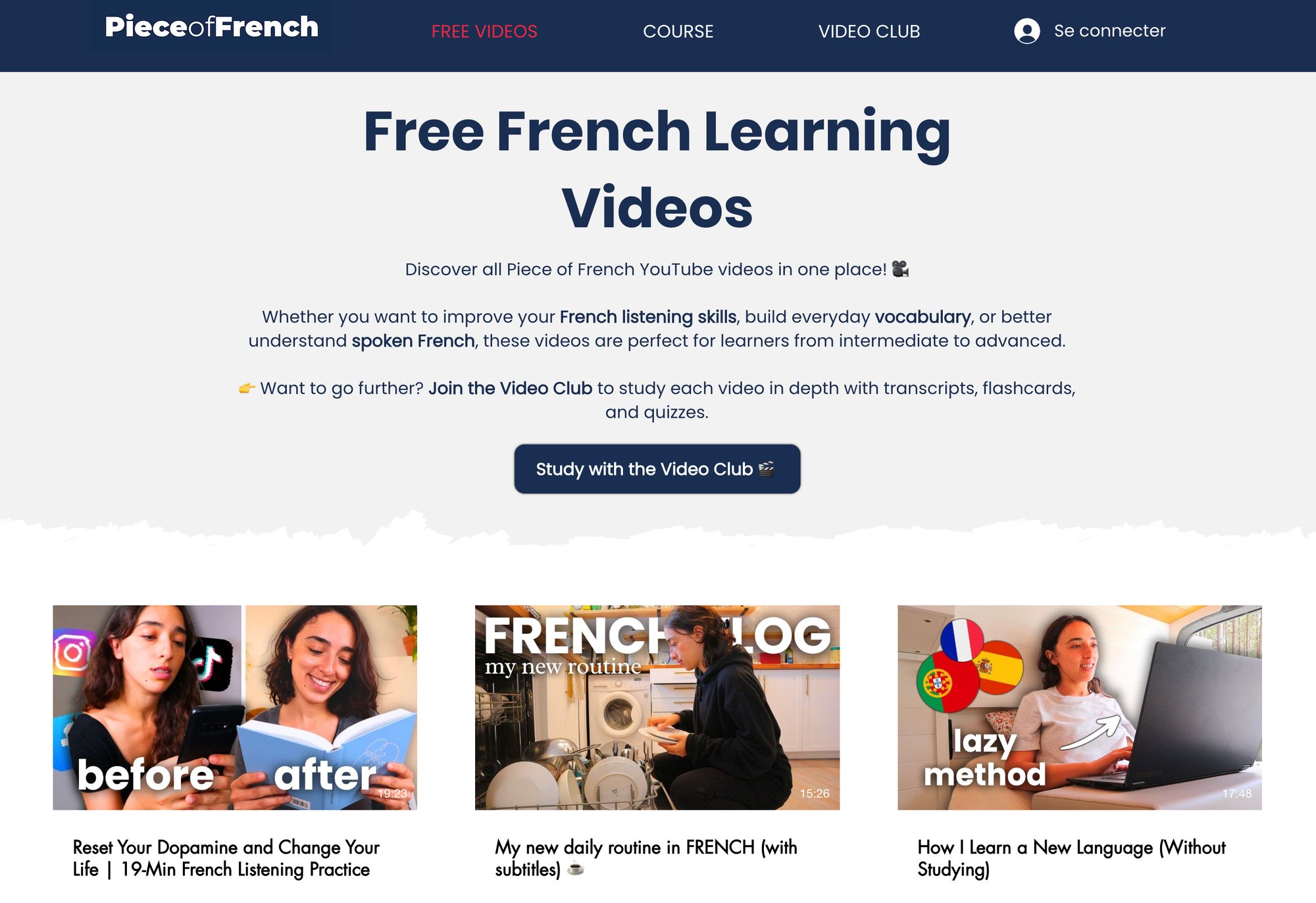
Hosted by Elsa, a native French teacher, Piece of French offers a slice of life that feels incredibly authentic and modern.
The Vibe
Elsa takes a "vlog" approach to her podcast. She speaks about her daily life, her travels, her thoughts on specific topics, or even just what she did that weekend. The audio quality is great, and her voice is full of energy. She speaks entirely in French, at a natural speed that is slightly adapted for learners but never feels childish.
Why It’s a Top Pick
Real Vocabulary: Because she talks about everyday situations (going to the dentist, moving house, shopping), you learn the specific vocabulary for daily life that textbooks often miss.
Visual Context (on YouTube): While available as a podcast, her episodes often have video counterparts which provide visual cues, making the input even more comprehensible.
Engaging Personality: Elsa feels like a friend updating you on her life, which makes it easy to binge-listen to multiple episodes without feeling fatigued.
Who Is It For?
Level: Intermediate (B1-B2)
Dialect: Standard French (France)
Format: Solo host, lifestyle/vlog style.
Link: Visit the Piece of French Website
4. One Thing In A French Day
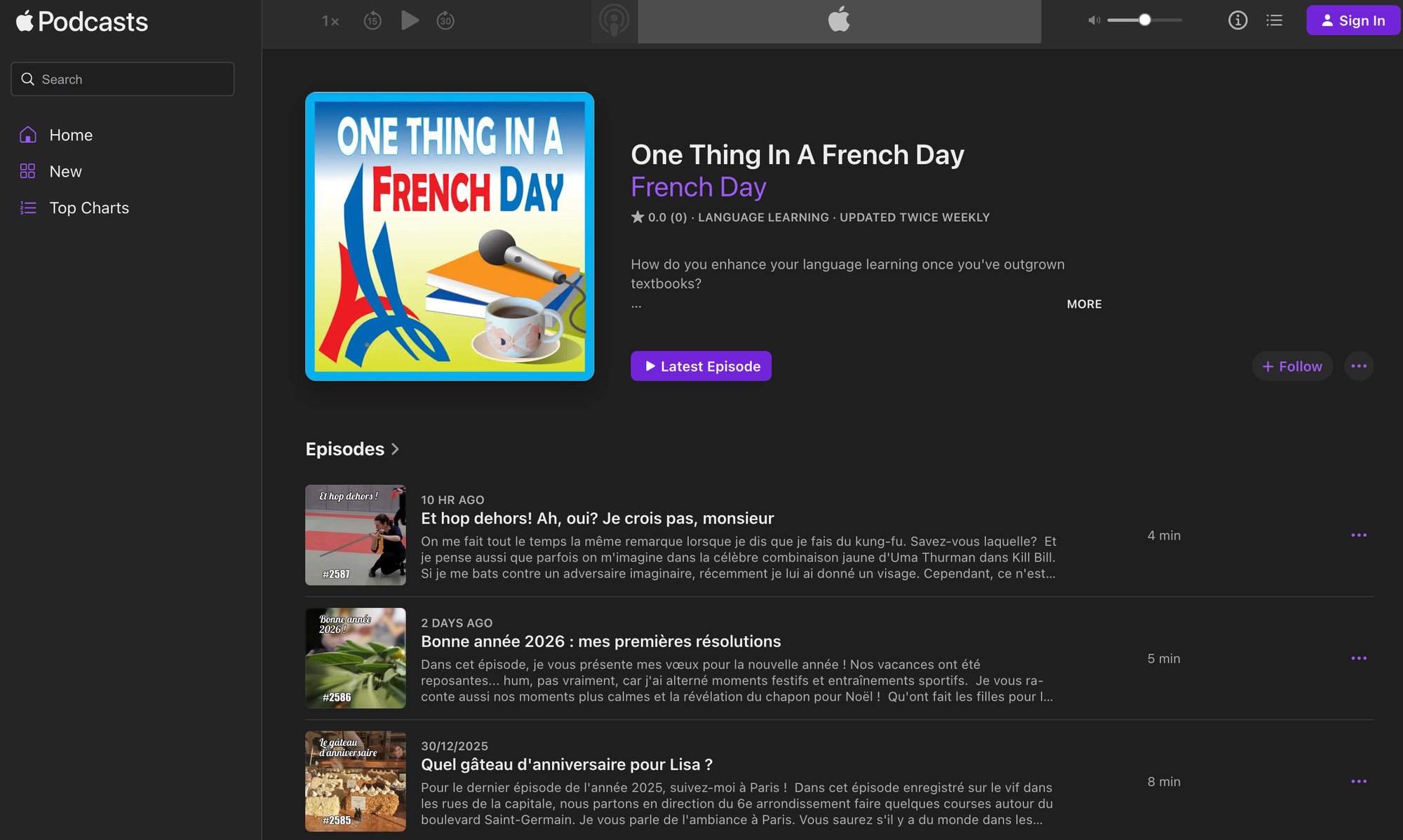
If you want consistency and a peek into real French life, One Thing In A French Day is a gem that has been running since 2006.
The Vibe
Hosted by Laetitia, this podcast offers short episodes (3-5 minutes) three times a week. The concept is beautifully simple: Laetitia describes one small event from her day in France. It could be buying croissants, a walk in Paris, or a family dinner. It is intimate, soothing, and completely authentic.
Why It’s a Top Pick
Manageable Chunks: Because the episodes are so short, you can easily listen to them multiple times to ensure 100% comprehension without getting bored.
Normal Speed: Laetitia speaks at a near-native speed. She doesn't slow down artificially, which is great training for your ears, but the short duration keeps it from becoming overwhelming.
Slice of Life: It is a fantastic way to learn the specific vocabulary of French routines and culture.
Who Is It For?
Level: Intermediate to Advanced
Dialect: Standard French (France)
Format: Short, frequent solo episodes.
Link: Visit One Thing In A French Day
5. Transfert
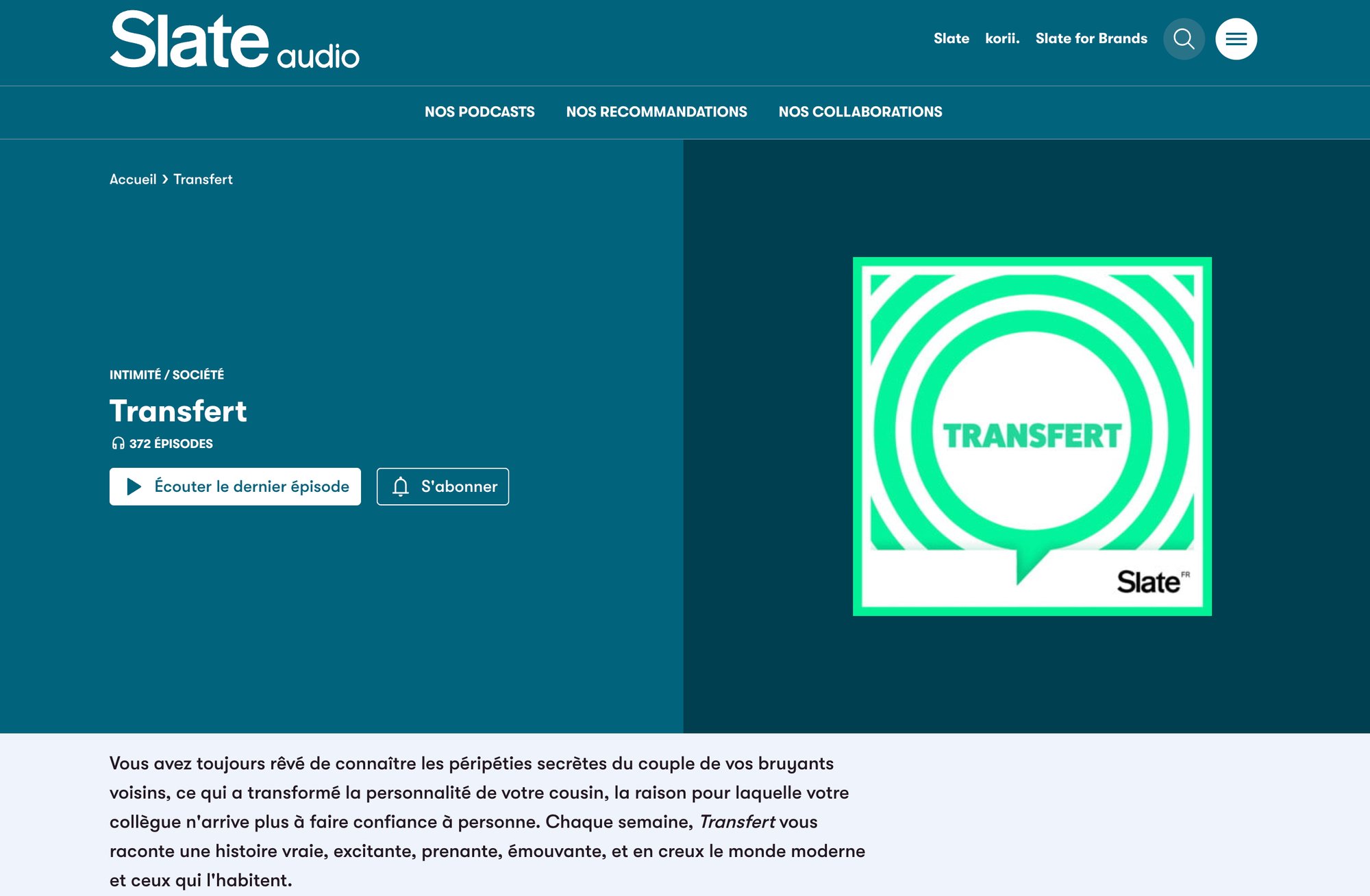
Produced by Slate.fr, Transfert is often called the French equivalent of This American Life. It is deep, emotional, and incredibly gripping.
The Vibe
This is high-quality narrative journalism. In each episode, a real person tells a story about a pivotal moment in their life—a secret, a crime, a romance, or a strange coincidence. The production value is top-tier, often with subtle sound design. It is not designed for learners, so it is 100% authentic native content.
Why It’s a Top Pick
Emotional Hook: The stories are so compelling that you will fight to understand every word just to know how it ends. This emotional engagement drives memory retention.
Diverse Voices: You hear from all sorts of people, not just professional broadcasters. This exposes you to how French people actually tell stories, including their hesitations, slang, and emotions.
Modern French: This is the language as it is spoken today in France, tackling modern taboos and social issues.
Who Is It For?
Level: Advanced (B2-C1)
Dialect: Standard French (France)
Format: Narrative non-fiction / Storytelling.
Link: Visit the Transfert Website
6. Grand Reportage (RFI)
B2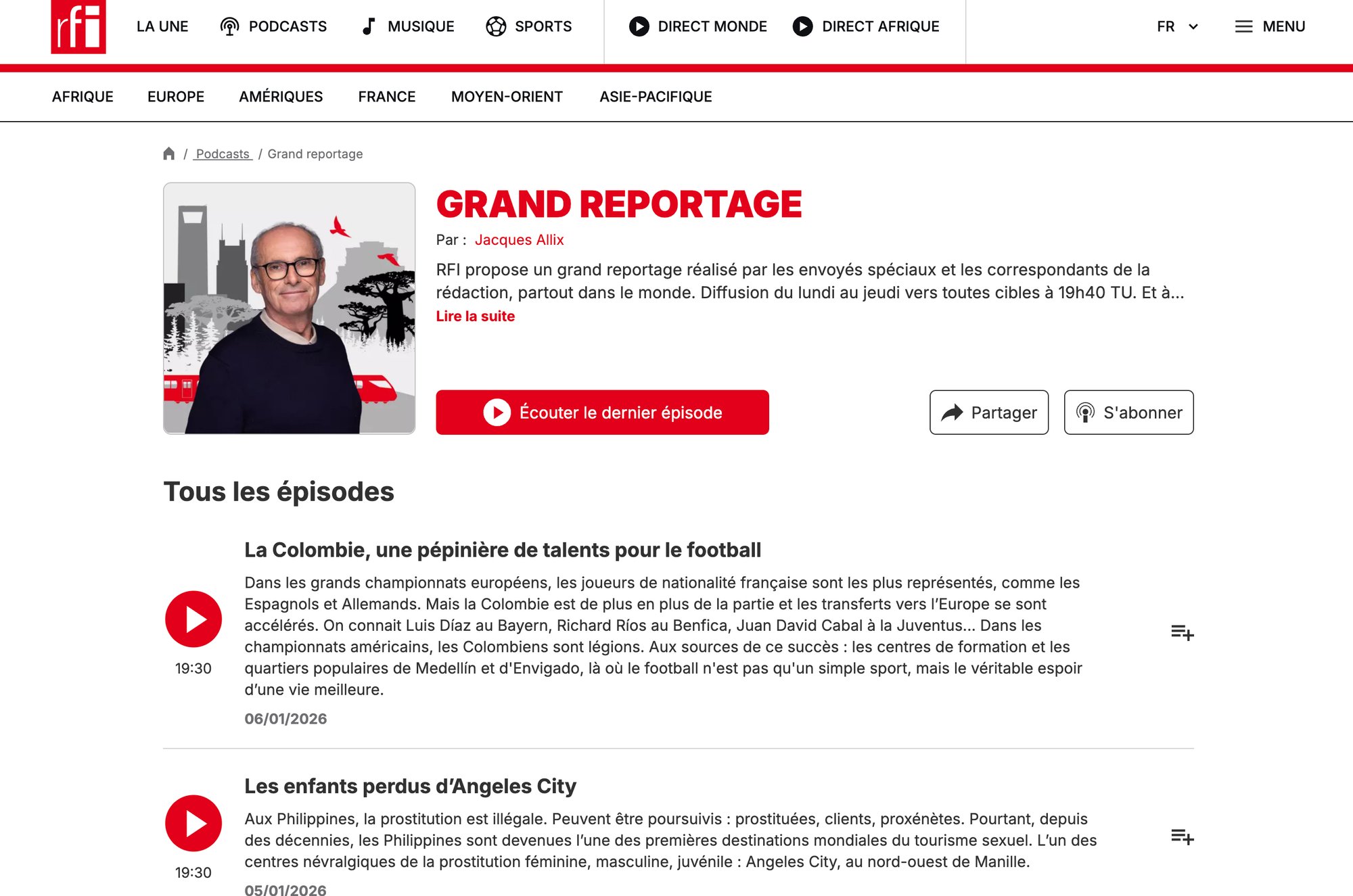
If you are ready to tackle complex global topics, Grand Reportage from Radio France Internationale (RFI) is the gold standard for documentary-style listening.
The Vibe
These are 20-minute audio documentaries covering news, geopolitics, and society from around the world. The journalists speak clearly but use sophisticated vocabulary and complex sentence structures. It feels professional, serious, and informative.
Why It’s a Top Pick
Global Perspective: RFI covers stories from Francophone Africa, Asia, and the Americas, exposing you to a wider variety of accents and French usage outside of Paris.
Intellectual Challenge: This is perfect for advanced learners who want to build vocabulary related to politics, economics, and human rights.
High Quality: As a public radio production, the sound quality and editing are impeccable.
Who Is It For?
Level: Advanced (B2-C1)
Dialect: International French / Standard
Format: Documentary / Journalism.
Link: Visit Grand Reportage
7. Babbel Podcasts (French)
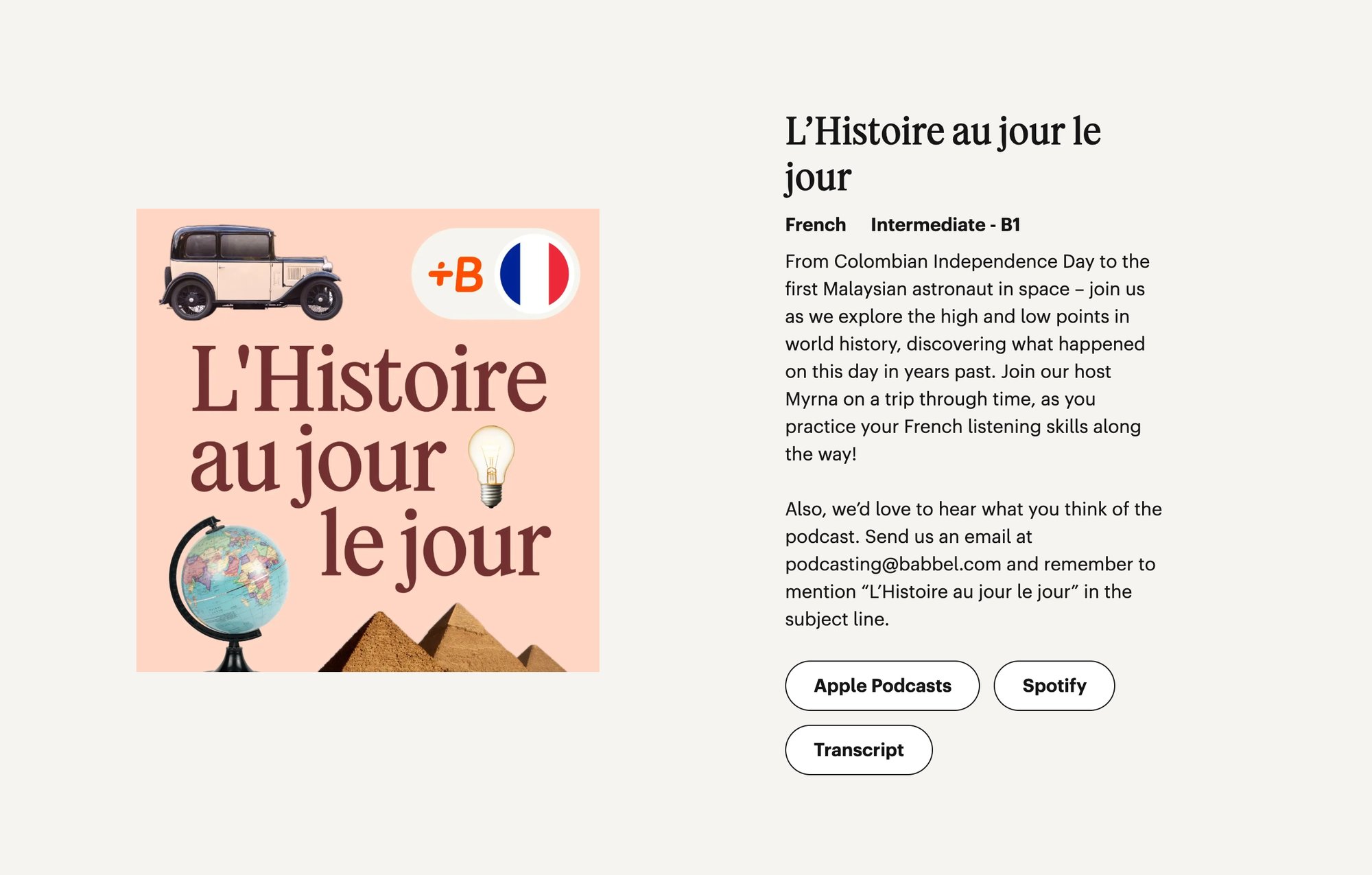
Just like their Spanish offerings, Babbel has created a suite of polished podcasts for learning French that cater to different interests and levels.
The Shows
Un tour en français: This is a fantastic series for intermediate learners. It takes you on a journey through the Francophone world (from France to Canada to Africa), mixing storytelling with cultural facts.
Parlez away: Aimed at beginners, this features a conversation between a learner and a native speaker, breaking down the basics of conversation.
Babbel News: Short news segments adapted for learners, helping you stay up to date while studying.
Why They’re Top Picks
Educational Structure: These are designed by linguists, meaning the grammar and vocabulary are controlled to ensure you aren't overwhelmed.
Production Value: Crisp audio and professional voice actors make listening a pleasure.
Variety: Whether you want travel stories or structured lessons, there is a format for you.
Who Is It For?
Level: Beginner to Intermediate (A1-B2)
Dialect: Standard French
Format: Varied (Narrative and Educational)
Link: Visit Babbel French Podcasts
8. Coffee Break French
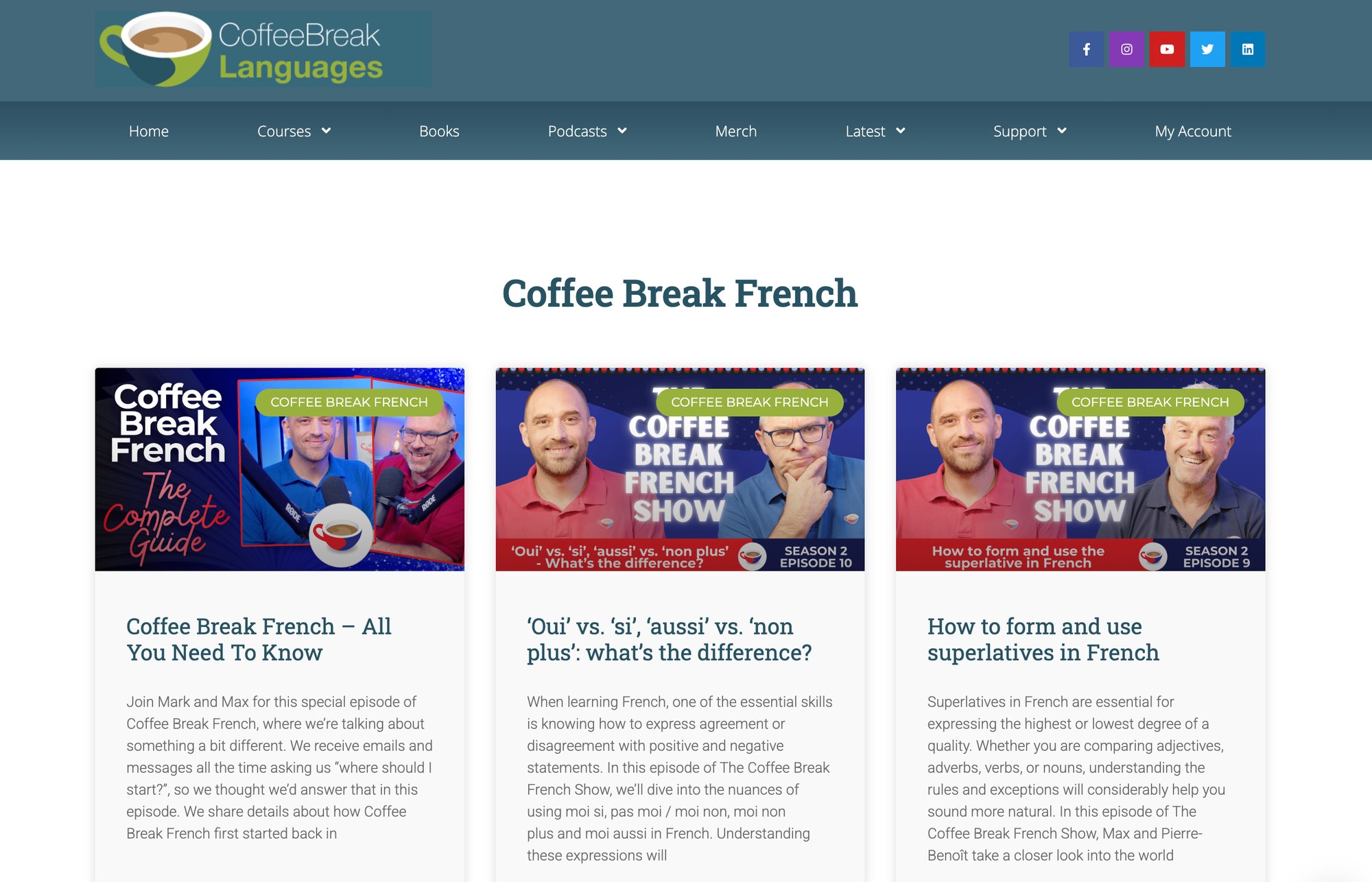
The classic choice for structured learning. Produced by Radio Lingua Network, Coffee Break French is arguably the most famous course-style podcast available.
Hosted by Mark Pentleton (a Scottish teacher) and a learner (originally Anna), it offers a step-by-step curriculum.
The Vibe
The atmosphere is warm, encouraging, and classroom-like but without the pressure. Because Mark teaches the learner during the episode, you get to hear the questions you would ask yourself. It is incredibly structured, building from "Hello" in Season 1 to complex literature in Season 4.
Why It’s a Top Pick
Structured Progression: It is a linear course. You can start at episode 1 with zero knowledge and end up fluent by the end of the seasons.
The "Student" Perspective: Hearing the student make mistakes and get corrected is one of the most effective ways to learn, as it mirrors your own process.
Reliability: With a massive archive, you have years' worth of material to listen to.
Who Is It For?
Level: Absolute Beginner to Advanced (A1-C1)
Dialect: Standard French
Format: Structured lessons, Teacher/Student dynamic.
Link: Visit Coffee Break French
9. LanguaTalk Slow French
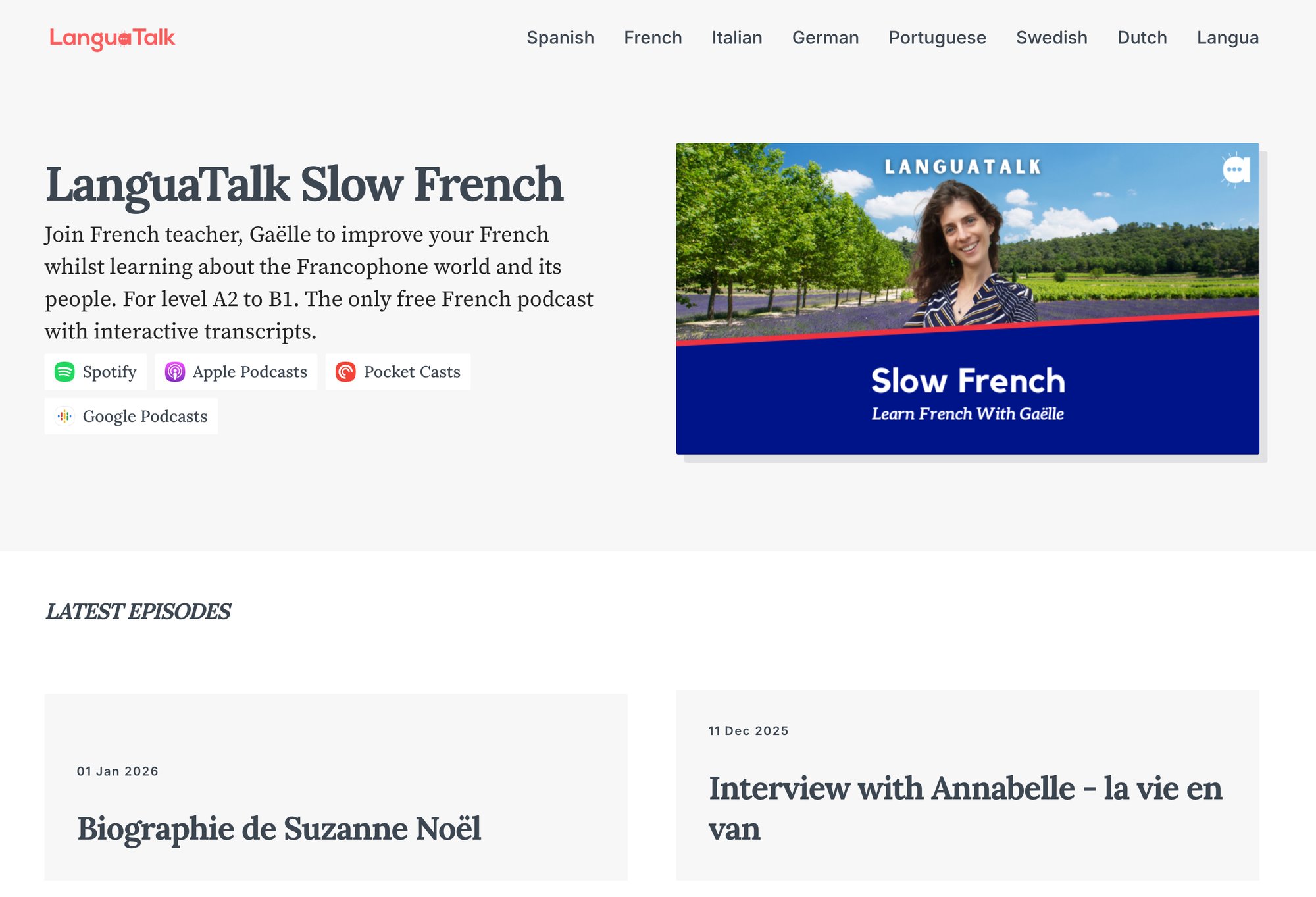
Hosted by Gaëlle, a native French teacher, this podcast strikes the perfect balance for learners who want to listen to interesting topics without the stress of native speed.
The Vibe
Gaëlle has a soothing, clear voice. She speaks entirely in French but at a deliberate, slower pace that makes the language accessible. She discusses engaging topics like the lives of famous French people, history, or social issues, rather than dry grammar rules.
Why It’s a Top Pick
Comprehensible Input: It hits the sweet spot for A2/B1 learners who find native podcasts too fast but beginner lessons too boring.
Interesting Content: You learn about French culture (like the life of Edith Piaf or the history of French cuisine) while you absorb the language.
Focus on Fluency: Gaëlle focuses on natural expressions and flow, even while speaking slowly.
Who Is It For?
Level: High Beginner to Intermediate (A2-B1)
Dialect: Standard French
Format: Solo host, educational storytelling.
Link: Visit LanguaTalk Slow French
10. News in Slow French
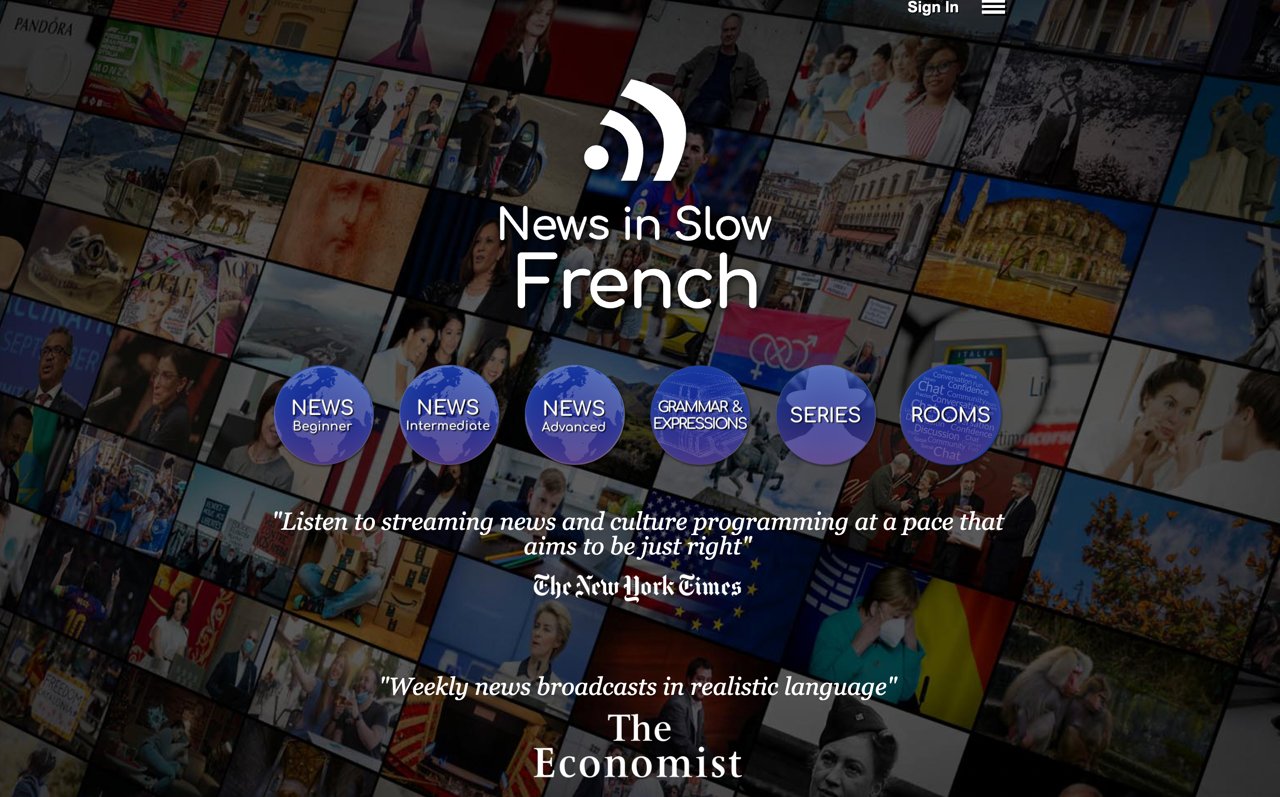
Just like its Spanish counterpart, News in Slow French is the premier destination for learners who want to keep up with current events without getting lost.
The Vibe
Professional, newsroom-style audio but played at a reduced speed. It covers the actual headlines of the week—politics, science, arts—making the content relevant and engaging for adults.
Why It’s a Top Pick
Contextual Learning: Because you likely know the news stories from your native language, you can use context to figure out new French vocabulary.
Grammar Segments: They expertly weave in explanations of the grammar used in the news stories, providing practical examples of rules in action.
Confidence Building: Understanding the news in a foreign language is a major milestone, and this podcast makes it achievable early on.
Who Is It For?
Level: Beginner to Intermediate (A1-B1)
Dialect: Standard French
Format: News broadcast, scripted and slow.
Link: Visit News in Slow French
11. Easy French (Podcast)
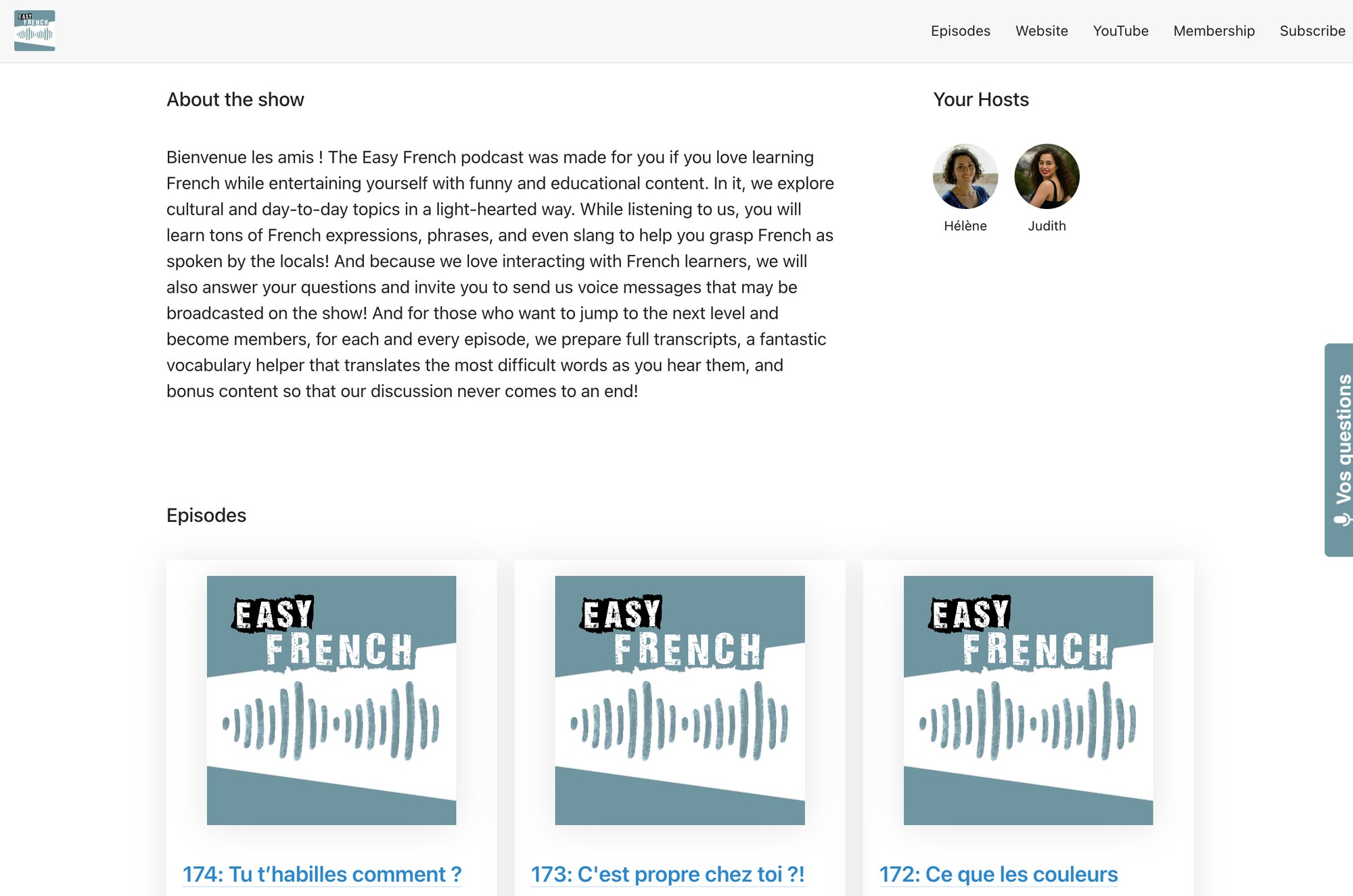
You might know them from their "street interview" YouTube videos, but their podcast is an incredible resource for hearing spontaneous, natural conversation.
Hosted by Hélène and Judith (and friends), Easy French focuses on casual conversation and cultural topics.
The Vibe
It feels like sitting in a café with French friends. They discuss everything from "verlan" (French slang) to deep cultural questions. It is unscripted, so you hear the real "uhms," "ahs," and sentence fillers that make up natural speech.
Why It’s a Top Pick
Real Spoken French: They don't speak "textbook French." They use the informal structures (dropping the "ne," making liaisons) that actual French people use.
Community Vibe: The hosts are charming and have great chemistry, making it a fun listen.
Vocabulary Helper: They often stop to explain difficult words or expressions in simpler French, keeping you in the immersion bubble.
Who Is It For?
Level: Intermediate to Advanced (B1-C1)
Dialect: Modern Spoken French
Format: Casual conversation.
Link: Visit Easy French
12. Duolingo French Podcast
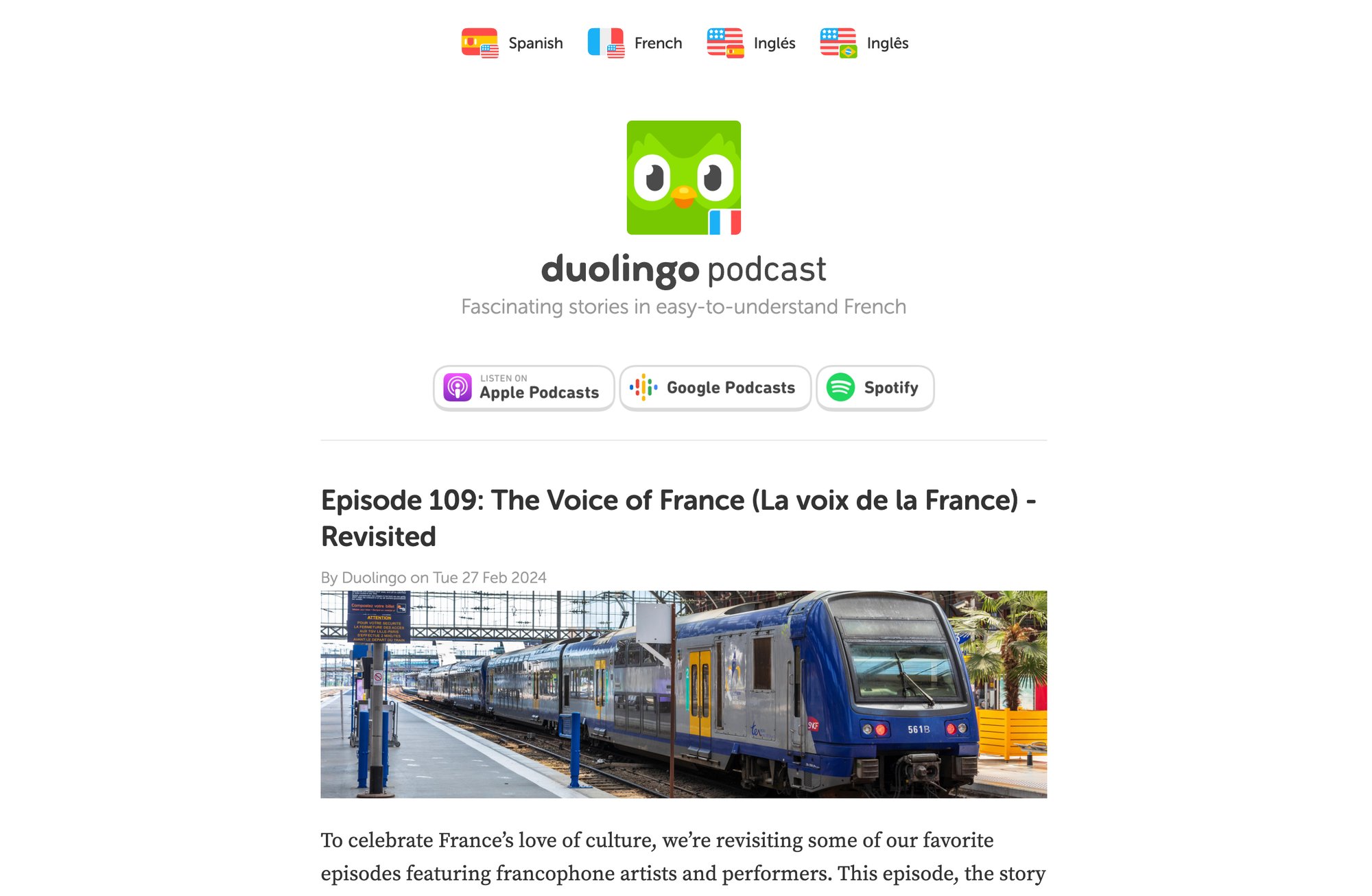
Hosted by Ngofeen Mputubwele, the Duolingo French Podcast is a masterpiece of bilingual storytelling.
The Vibe
This podcast features fascinating true stories from the Francophone world—from a baker in Paris to a surfer in Tahiti. The unique format features the protagonist telling their story in simplified, easy-to-understand French, interspersed with English narration from the host to ensure you never lose the thread of the story.
Why It’s a Top Pick
The Safety Net: The English narration prevents you from getting lost, allowing you to enjoy complex narratives even at a lower level of proficiency.
Global Francophonie: It does an excellent job of highlighting stories from outside of France, exposing you to the diversity of the French-speaking world.
Emotional Impact: The stories are often moving and inspiring, which keeps you engaged way more than a grammar drill ever could.
Who Is It For?
Level: High Beginner to Intermediate (A2-B1)
Dialect: Diverse (Global French)
Format: Bilingual Storytelling.
Link: Visit the Duolingo French Podcast
Integrating Podcasts Into a Winning French Study Plan
You now have a comprehensive list of some of the best French language learning podcasts. The true value, however, lies not just in finding the perfect podcast but in transforming passive listening into an active, strategic part of your study routine.
Consistency and strategic implementation are what separate casual listeners from learners who achieve fluency. Simply playing a podcast in the background is a start, but real progress comes from deliberate engagement. This means choosing content that is comprehensible yet challenging, actively listening for gist, and using techniques like shadowing or summarizing to process the information.
From Passive Listening to Active Fluency
To truly leverage the power of podcasts, you must build a system around them. Your journey from intermediate plateaus to advanced comprehension depends on how you integrate these audio resources into a learning plan.
Here are the essential steps to turn your listening habit into a fluency engine:
Select with Purpose: Don't just pick a popular show. Revisit the categories in this article and choose one or two podcasts that align with your current level (A2, B1, C1) and your specific interests. If you love deep storytelling, Transfert might be a better fit than a news show.
Schedule Your Listening: Treat your podcast time like any other important appointment. Dedicate a specific slot each day, even if it is just 15 minutes during your commute or while doing chores. This consistency builds the listening "muscle" far more effectively than sporadic, long sessions.
Engage Actively: Move beyond just hearing the words. Your goal is comprehension. Start by trying to grasp the main idea of an episode. As you improve, focus on details, new vocabulary, and grammatical structures. At times pause and rewind when you encounter a challenging section.
Bridge the Comprehension Gap: Listening alone is not enough to build a robust vocabulary. The most critical step is capturing, understanding, and retaining the new words and phrases you hear. This is where dedicated tools become indispensable.
Choosing Your Tools and Building Your System
The podcast player you choose, whether it is Spotify, Apple Podcasts, or a dedicated app like Pocket Casts, is simply the delivery mechanism. The real learning happens when you connect that audio input to a system for vocabulary acquisition and review. This is the crucial link that many self-directed learners miss.
Consider this: hearing a new word is the first touchpoint, but it takes multiple, spaced repetitions for that word to move into your long-term memory. Manually creating flashcards from podcast episodes is time-consuming and often inefficient. This is precisely the problem that a tool like Lenguia is designed to solve. By integrating directly with your listening content and providing clickable transcripts, it automates the process of capturing new vocabulary, providing context-rich definitions, and scheduling intelligent reviews.
Ultimately, your success with French language learning podcasts will be defined by the system you create. Start small. Pick one podcast from our list, commit to listening to one episode three times this week, and use a tool to capture and review at least five new words from each session. This methodical approach, combining high-quality input with smart repetition, is the most reliable path to transforming your listening skills and achieving your French fluency goals. You have the tools and the strategy; now, it is time to press play.
Ready to turn your passive listening into active learning? Lenguia transforms your favorite French language podcasts into interactive lessons, allowing you to get instant translations, create smart flashcards from new words, and track your progress seamlessly. Stop just listening and start understanding with Lenguia today.