What Is a Polyglot and How Do You Become One
So, what exactly is a polyglot? It's someone who can speak and use several different languages. The term isn't about being perfect; it's about having a real, working command of multiple languages, enough to have meaningful conversations with different groups of people.
Defining a True Polyglot
Many people hear the word "polyglot" and immediately picture someone with native-like fluency in a dozen languages. But the reality is much more nuanced and way more achievable. There’s no official magic number that suddenly turns you into a polyglot.
A useful way to think about it is to compare it to being a versatile musician. A musician might play the piano at an expert level, strum the guitar proficiently, and keep a basic beat on the drums. They're still considered a multi-instrumentalist because they can create music with each one.
It’s the same with languages. A polyglot might speak English and Spanish fluently, hold professional conversations in French, and be able to navigate daily life in Italian. This flexible definition is really encouraging because it shifts the goal from unattainable perfection to building a practical skillset across a portfolio of languages. Your journey is your own, with different levels of mastery for each language.
Understanding the Levels of Multilingualism
To get a better handle on this, it helps to see how the different labels stack up. The lines can definitely be a bit blurry, but here’s a general framework that people use.
Use this table as a quick guide to the common terms for people who speak multiple languages.
| Term | Number of Languages | Brief Description |
|---|---|---|
| Bilingual | 2 | A person who can communicate effectively in two different languages. |
| Trilingual | 3 | Someone who has the ability to use three distinct languages. |
| Polyglot | 4+ | Generally refers to someone who speaks four or more languages. |
| Hyperpolyglot | 10+ | A term for individuals with an exceptional ability to speak ten or more languages. |
This table provides a simple breakdown, but keep in mind that these are just labels. The real focus should always be on communication and connection.
And it seems more and more people are catching on. According to a recent study, the trend of multilingualism is growing, and learners studying three or more languages are becoming more common across the globe. For more fascinating stats, you can check out the full 2023 Duolingo Language Report.
The Different Kinds of Polyglots You Will Meet
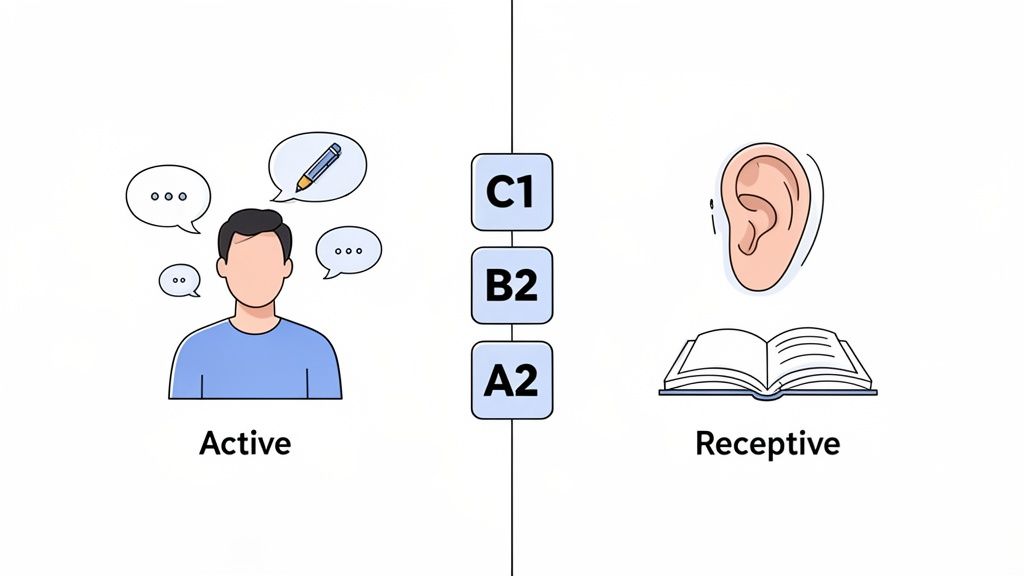
One of the most important distinctions to understand is the difference between active and receptive language skills. How a polyglot actually uses their languages day-to-day often comes down to this split.
Active Versus Receptive Skills
An active polyglot is someone who can produce the language. They’re comfortable speaking and writing in their different languages, using them to express their own thoughts and communicate with others.
On the flip side, a receptive polyglot has strong comprehension skills. They can follow a movie, read the news, and understand what people are saying, but might not feel as confident speaking or writing back. This is an incredibly common stage for learners. If this sounds familiar, we have a helpful guide on what to do when you understand a second language but can't speak it.
Here's a key insight: most polyglots have a mix of active and receptive skills across their languages. It's totally normal to have one language you can actively use for anything, while another is mostly for understanding media.
Understanding this difference is a game-changer because it shatters the all-or-nothing mindset. You don't need to be a perfect speaker in every single language to call yourself a polyglot. Building powerful listening and reading skills is a huge achievement in itself.
A Spectrum of Proficiency
Another myth to bust is the idea that polyglots are equally fluent in all their languages. A polyglot’s language portfolio is usually a mix of different skill levels.
We often measure this using the Common European Framework of Reference for Languages (CEFR). A polyglot’s real-world skill set might look something like this:
Spanish: C1 (Advanced) – They can easily handle complex work meetings and academic discussions.
French: B2 (Upper-Intermediate) – They can chat spontaneously with native speakers and get the gist of complex articles.
German: A2 (Elementary) – They can manage simple, everyday conversations and order a coffee without breaking a sweat.
Seeing it this way turns the intimidating goal of "becoming a polyglot" from one giant mountain into a series of smaller, manageable hills. Your journey is your own, and it's all about building skills that are actually useful to you, not chasing some impossible ideal of perfection.
Debunking Common Polyglot Myths
Let's get one thing straight: most of what you've heard about needing a special "language gene" to become a polyglot is complete nonsense. A lot of aspiring learners get tripped up by these old-school myths, making the goal feel impossible before they even start. Talent is certainly part of the equation, but almost anyone can learn multiple languages.
Humans are so innately hardwired for language that they can no more suppress their ability to learn and use language than they can suppress the instinct to pull a hand back from a hot surface.
―Steven Pinker,The Language Instinct: How the Mind Creates Language
So Ii's time to bust these myths. Multilingualism isn't some exclusive club; it's a skill anyone can build with the right mindset and strategy.
The biggest myth, the one heard all the time, is that you have to start as a kid. Sure, kids are amazing at soaking up their first language through sheer exposure, but adults bring some serious advantages to the table. We already know how to learn. We have established study habits, a solid grasp of grammar concepts that we just need to map to new languages, and the freedom to choose methods that actually work for us.
The whole "critical period" idea that slams the door shut on language learning after childhood just isn't the full picture. With the right approach, adults can and regularly do become fluent in multiple languages.
You Are Not a Genius, and That Is Okay
Another intimidating idea is that only geniuses can handle more than one or two languages. This paints a picture of polyglots as some kind of intellectual elite, a notion that's not just wrong, but discouraging. The truth is much simpler and way more encouraging: it’s about dedication, not genius.
Successful polyglots come from every background imaginable. Their secret isn't a sky-high IQ; it’s finding a way to make learning consistent and genuinely enjoyable. They weave their target languages into their daily lives, turning what could be a chore into something they actually look forward to. That consistency is the real engine of progress.
Focus on process, not perfection. Ditch the goal of sounding like a native speaker from day one. Instead, celebrate the small wins, like understanding your first podcast episode or having a simple exchange.
Lean into your interests. Love to cook? Find recipes in Spanish. Are you a movie buff? Watch French films with subtitles. Using your hobbies is the easiest shortcut to making learning stick.
Find your people. Connect with a language exchange partner or join an online community. That human connection makes the whole process more meaningful and keeps you motivated.
Your Brain Will Not Get Confused
A lot of people worry that learning a new language will mess up the ones they already know. Will picking up Italian make you forget your Spanish? The short answer is no.
Sure, you might get some "cross-talk" at the beginning, especially with similar languages. This is totally normal. But your brain is incredibly good at compartmentalizing.
Think of it like a library. At first, you might accidentally shelve a Spanish book in the French section. But the more you use both languages, the better your brain gets at building clear pathways to the right "shelf." This skill, known as code-switching, becomes almost automatic over time. Consistent exposure to each language strengthens these mental divisions until grabbing the right word feels completely natural.
Real World Benefits of Multilingual Thinking
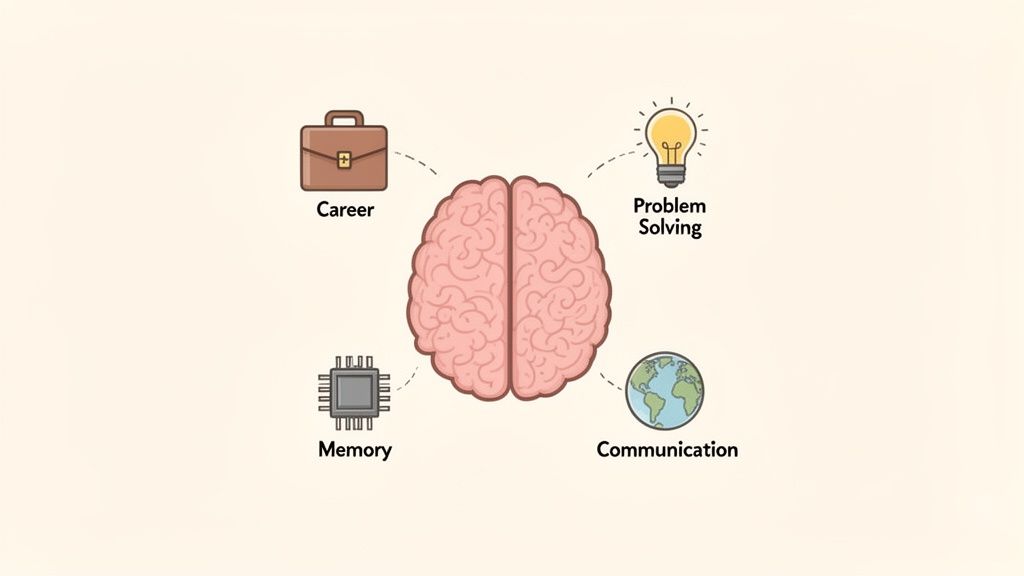
The perks of knowing multiple languages go way beyond just making travel easier. When you learn to think in different linguistic systems, you're giving yourself some serious real-world advantages that sharpen your mind and open up professional doors.
Think of it this way: engaging with new grammar and vocabulary is a workout for your brain. This mental exercise beefs up your cognitive abilities, making you a more flexible and creative thinker. You're basically training your mind to see the world from several different angles at once.
Sharpening Your Cognitive Toolkit
Constantly jumping between language systems boosts what scientists call cognitive flexibility. This is your brain's knack for shifting from one concept to another and juggling multiple ideas simultaneously.
This skill has a direct payoff in real-world problem-solving. A polyglot’s brain gets really good at finding different ways to express the same idea, which builds the mental muscle for innovation and adaptability in any field.
Thinking like a polyglot means you’re not just translating words. You’re learning to navigate different cultural frameworks and communication styles, which is a powerful advantage in any multicultural setting.
Gaining a Professional Edge
In today’s job market, multilingual skills give you a clear competitive advantage. Companies value employees who can bridge communication gaps with international clients, partners, and team members, making you a much more valuable asset.
Imagine being in an international business negotiation. A polyglot can pick up on cultural nuances and subtle meanings that a translation service might completely miss. That deeper understanding can be the key to building rapport and closing the deal.
Speaking multiple languages opens up a wider range of career opportunities and often leads to higher earning potential. To get a better handle on the personal and professional growth that comes with learning languages, you can explore the numerous advantages of acquiring a foreign language.
Your Practical Roadmap to Becoming a Polyglot
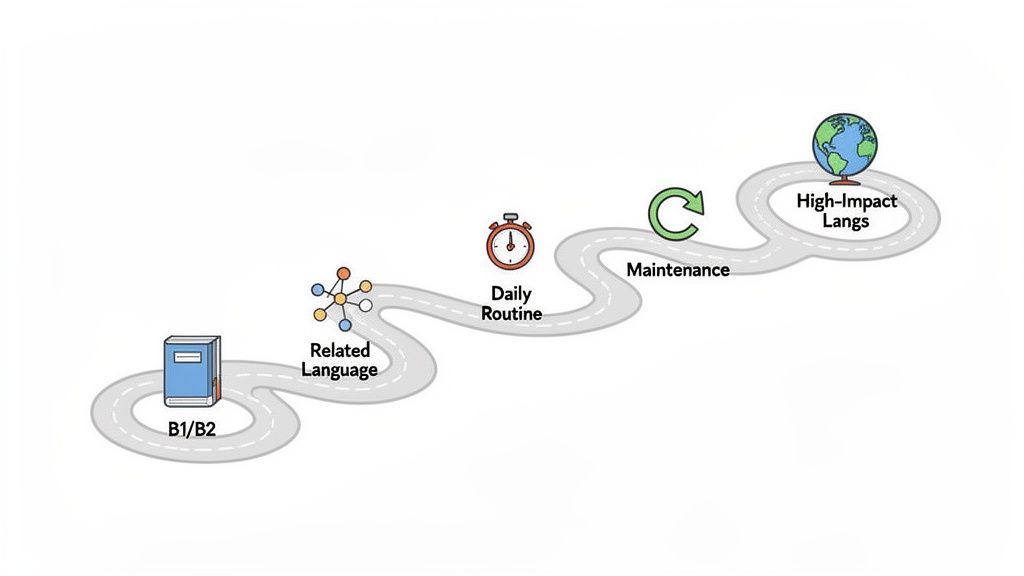
Turning the dream of being a polyglot into a real, achievable goal comes down to having a practical plan. The focus is on sustainable momentum, not burnout.
The most critical first step is to focus on one language until you reach a solid intermediate level. You're aiming for a B1 or B2 proficiency, that sweet spot where you can handle most daily conversations and get the gist of complex topics. Building this strong foundation is everything before you even think about branching out.
Trying to learn multiple languages from scratch at the same time is a classic recipe for frustration and painfully slow progress. If you're curious about the specifics, our guide on whether you should learn two languages at the same time digs into this in much more detail. Once you have that first language locked in, you can move to the next stage with real confidence.
Choosing Your Next Language Wisely
Your second language choice can make or break your momentum. A smart move is to pick a language from the same family as your first one. For instance, if you've put in the work to learn Spanish, pivoting to Italian, Portuguese, or French will feel like a massive shortcut.
These languages share a ton of grammar and vocabulary, giving you a huge head start. This "language laddering" technique builds positive momentum and makes the whole process feel much more manageable. You’re building on what you already know instead of starting from zero.
Developing a Maintenance Routine
As you add more languages to your arsenal, you'll need a simple plan to keep your skills from getting rusty. This doesn't mean hours of study every day. The key is consistent, low-effort engagement.
The 15-Minute Rule: Just spend 15 minutes a day with each of your "maintenance" languages. This could be listening to a podcast on your commute, reading a short news article, or flipping through some flashcards.
Rotate Your Focus: You might dedicate Monday to French, Tuesday to German, and so on. This keeps you from feeling swamped while making sure every language gets regular attention.
The goal isn't to be perfect in every language, every single day. It's about consistent, light-touch exposure that keeps those neural pathways active and prevents your hard-earned skills from fading away.
The Right Tools for the Polyglot Journey
Having the right tools can be the difference between a slow, frustrating climb and a fast, enjoyable ascent to multilingualism. For anyone serious about becoming a polyglot, efficiency isn't just a nice-to-have; it's everything. You need an ecosystem that supports learning new languages while making it almost effortless to maintain the ones you already know.
This is why Lenguia is built specifically for (future) multilinguals. The ability to switch between different languages under a single subscription fits the polyglot lifestyle perfectly. It lets you learn new languages and maintain old ones without any friction, keeping all your progress organized in one spot.
Making Your Practice Stick
The best tools are the ones that make practice feel less like a chore and more like something you actually want to do. Methods grounded in Comprehensible Input are super powerful here. Instead of grinding through mind-numbing grammar drills, you get to dive into content you genuinely find interesting.
Engaging with daily stories and podcasts that are tailored to your level transforms learning into a natural process. You start absorbing vocabulary and grammar patterns organically, just by listening and reading. If you want to go deeper into this concept, check out our guide on what is Comprehensible Input and how it works.
The real secret to long-term success for any aspiring polyglot is consistency. Tools that make daily practice enjoyable aren't just a convenience; they're the foundation of a sustainable learning habit.
When you focus on compelling content, you create a positive feedback loop. The more you enjoy the process, the more you practice. The more you practice, the faster you improve. It’s that simple.
A Sample Daily Polyglot Routine
So, what does this look like in the real world? An integrated toolset helps you structure your day for maximum impact without needing hours of free time. You can build a routine that fits neatly into your existing schedule, all within one platform.
Here’s a simple but incredibly effective daily plan:
45 minutes on your primary language: Kick off your day by listening to a short story or podcast at your level. Follow up with digital flashcards using a spaced repetition system to lock in new words from the text.
10 minutes on a secondary language: Switch over to your next focus language. Maybe you read a short article or use an AI language coach to work through a tricky grammar point you noticed earlier.
5 minutes on review: Wrap up with a quick review of a "maintenance" language. Just a few minutes with flashcards is all it takes to keep your vocabulary sharp and those neural pathways active.
This entire 1-hour routine helps you build and maintain multiple languages without burning out. It proves that with the right approach and the right tools, the polyglot dream is more accessible than you might think.
Common Questions on the Path to Becoming a Polyglot
Let's tackle some of the most common things aspiring polyglots wonder about.
How Do I Find the Time to Learn Multiple Languages?
Here's a practical tip: you don't find more time. You get smarter with the time you already have. Forget about heroic, multi-hour study sessions that leave you drained. Consistency will always beat cramming.
The most effective strategy is to weave language practice into the cracks of your daily life. Listen to a podcast on your commute or while you're washing dishes. Flip through some flashcards on your coffee break. Honestly, 15-60 minutes of focused, daily contact with a language is way more powerful than trying to cram for hours once a week.
Should I Learn Similar Languages (Like Spanish and Italian) or Totally Different Ones?
This is a classic strategic crossroads, and there’s no single right answer.
Tackling languages from the same family, like picking up Italian after you already know some Spanish, can feel like you’ve been given a cheat code. You get a massive head start from all the shared words and grammar, which can build some serious momentum.
On the other hand, learning two wildly different languages, say Japanese and Portuguese, creates very clear mental boundaries. Your brain builds separate "shelves" for each one, so there's less risk of getting your wires crossed and mixing them up.
A Word of Advice: Most seasoned polyglots will tell you the same thing: get one language to a solid intermediate stage (think B1) before you even think about adding another. This gives you a strong foundation and helps you avoid the burnout that comes from juggling two beginner-level languages at once.
What Level Should I Reach Before Starting a New Language?
While there's no official rule, the general consensus is to hit a comfortable intermediate level in one language before adding a second. This usually lines up with the B1 or B2 level on the CEFR scale.
Ready to build a polyglot routine with tools designed for efficiency and enjoyment? Lenguia offers an AI-powered ecosystem that makes managing multiple languages simple. Start your journey with engaging, level-appropriate content at https://www.lenguia.com.