German Language Podcasts: Top Picks to Accelerate Your Learning
German language podcasts offer a powerful, engaging way to immerse yourself in authentic speech, moving beyond textbooks and into the world of natural conversation, news, and storytelling. They solve a critical problem for learners: accessing a steady stream of comprehensible input that fits into daily life, whether you're commuting, exercising, or doing chores.
This guide provides practical strategies to help you find and effectively use the right german language podcasts for your specific level and learning goals. We will move beyond simple recommendations and show you how to turn passive listening into an active learning process.
You'll find shows perfect for A2 learners and content that will challenge even C1 speakers. This resource is designed to give you the tools to find shows you'll genuinely enjoy and stick with on your path to fluency. Here is our Top 12!
1. Easy German

This is widely considered the gold standard for modern German learning. Hosts Cari and Manuel (along with their team) have created a phenomenon that blends a YouTube channel (famous for street interviews) with a conversational podcast. It is fun, authentic, and deals with real life in Berlin and Germany, covering everything from politics to philosophy to "Do Germans have humor?".
The vibe is incredibly friendly and welcoming. Unlike dry news reports, this feels like hanging out with friends. They explain difficult words in German as they go, and the production quality is top-tier. It connects you to the culture of Germany, not just the grammar.
Best For & Practical Tips
Best for: Low Intermediate to Advanced learners (A2-C1) who want to feel part of a community.
| Feature | Details |
|---|---|
| CEFR Level | A2-C1 |
| Access | Free (Membership for transcripts/vocab tool) |
| Transcripts | Available for members |
| Unique Offering | Authentic street culture and a massive, supportive community |
Website: https://www.easygerman.org/
2. Lenguia
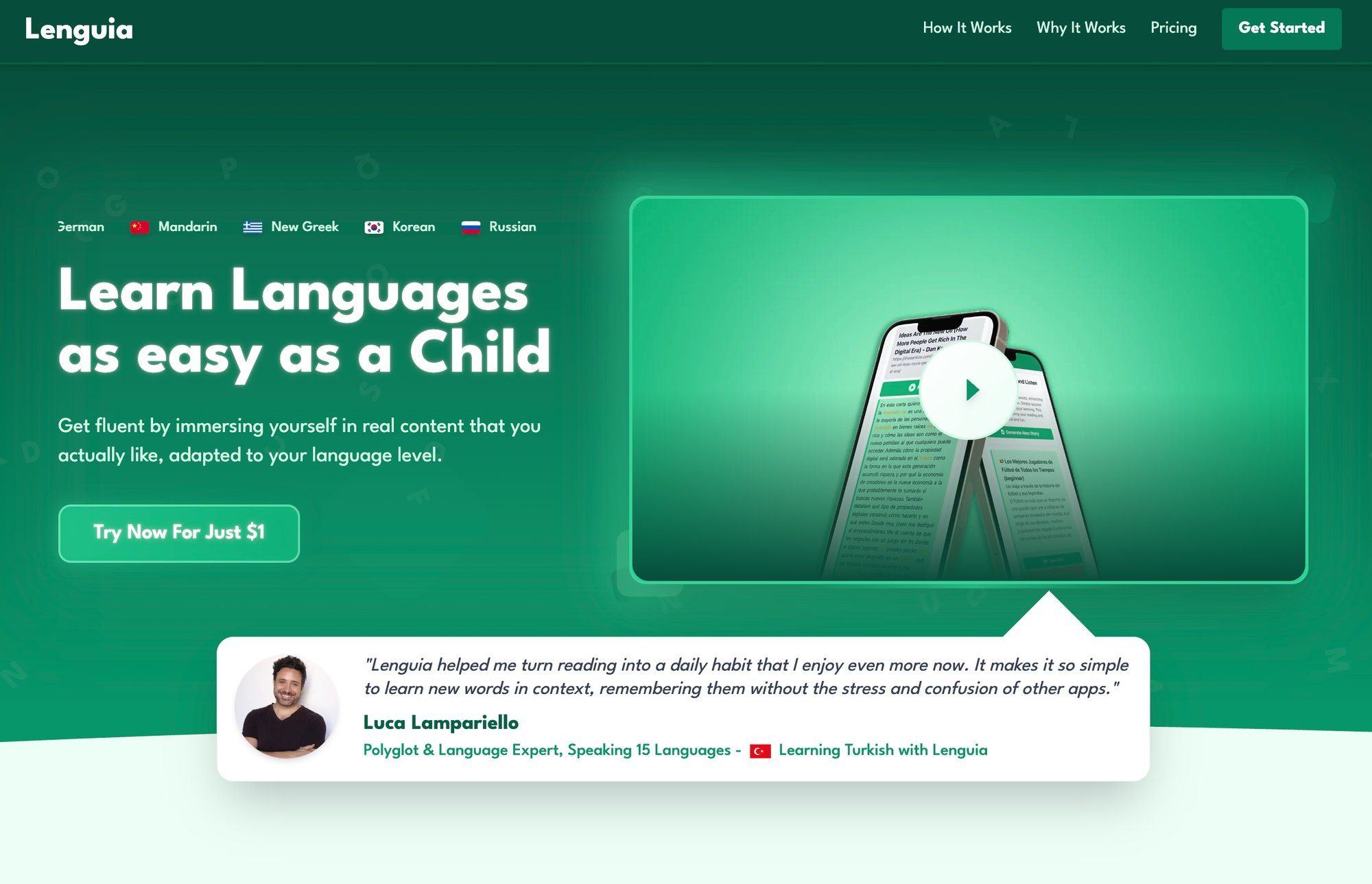
Though not a podcast itself, Lenguia enhances every German podcast by providing interactive transcripts and explanations. It is a comprehensive, AI-powered platform designed to transform authentic content—including shows like Easy German or Auf Deutsch gesagt!—into effective study materials.
Built on the principles of comprehensible input, it is an exceptional tool for intermediate (A2+) and advanced learners who want to move beyond textbooks. Instead of isolated drills, Lenguia helps you acquire German naturally by engaging with content you find genuinely interesting. You can import any audio file, and the platform creates interactive transcripts where every word is clickable for instant definitions.
Best For & Practical Tips
Best for: Intermediate (A2+) to Advanced learners who want to build fluency using real-world audio.
Tip: Use the "Import" feature to upload native German content that usually has no transcript (like radio shows from ARD). Lenguia will generate one for you, allowing you to study materials that were previously too difficult.
| Feature | Details |
|---|---|
| CEFR Level | A2+ (Intermediate to Advanced) |
| Access | Subscription (covers multiple languages) |
| Transcripts | AI-generated, interactive, and clickable |
| Unique Offering | Import any German audio to create instant study lessons |
Website: https://lenguia.com/
3. Deutsche Welle (DW) – Langsam Gesprochene Nachrichten
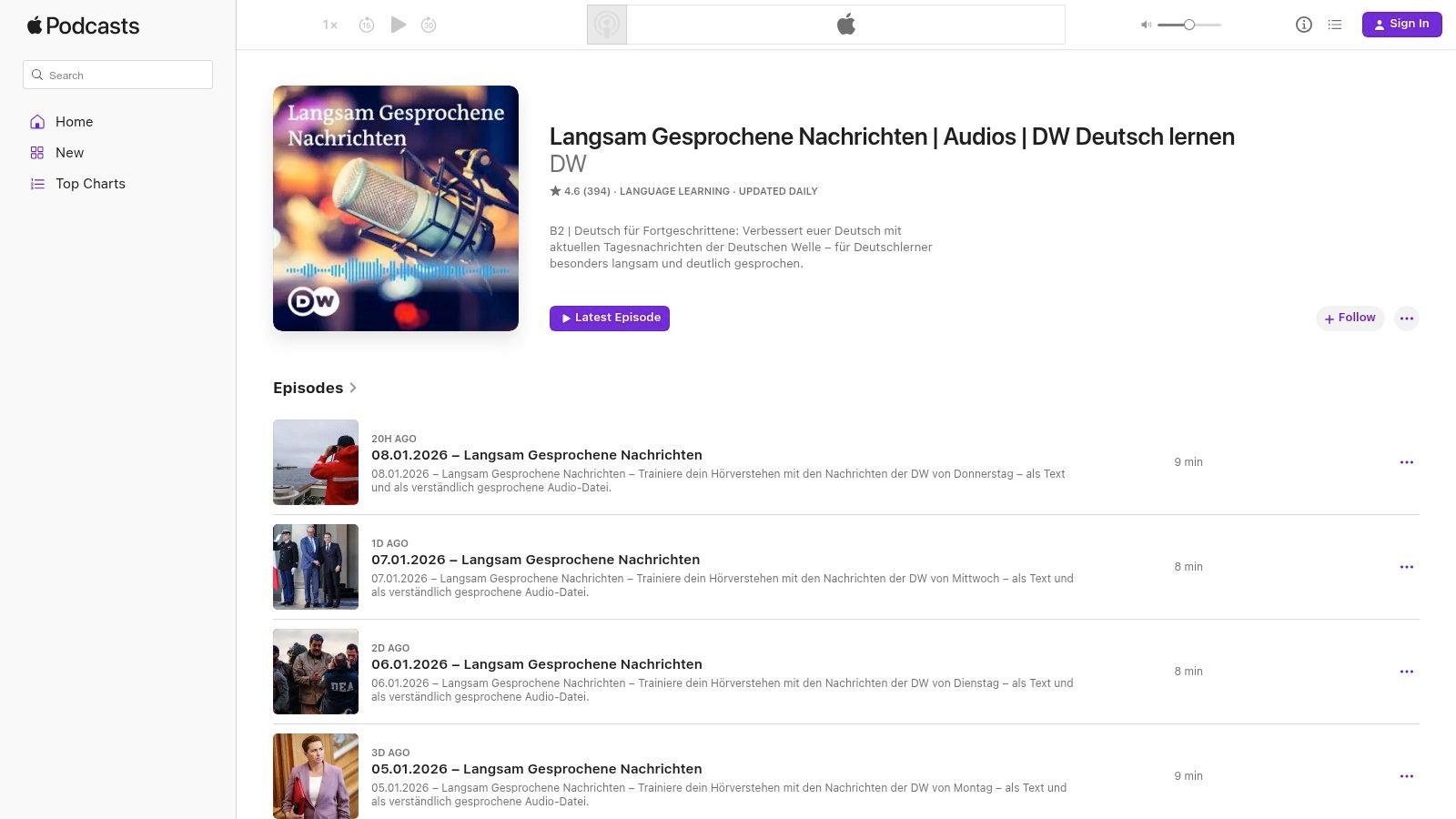
For decades, Deutsche Welle has been the backbone of German instruction abroad. Their "Langsam gesprochene Nachrichten" (Slowly Spoken News) is a daily institution. Every single day (except Sundays), they publish a short news broadcast covering the actual world headlines, but read at a significantly reduced speed.
The German is formal, precise, and standard (Hochdeutsch), making it the perfect resource for training your ear to the sounds of the language without the slurring or slang found in casual conversation. Because it covers global news, you usually have the context from your own language, which aids comprehension.
Best For & Practical Tips
Best for: Intermediate learners (B1-B2) who want to stay informed and practice formal listening.
Tip: The manuscript is always available on their website. Read the text before listening to prime your brain for the vocabulary, then listen to the audio to cement the pronunciation.
| Feature | Details |
|---|---|
| CEFR Level | B1-B2 |
| Access | Free |
| Transcripts | Free (Full manuscript daily) |
| Unique Offering | Daily consistency and high-quality standard German |
Website: https://learngerman.dw.com/de/langsam-gesprochene-nachrichten/s-60040332
4. Slow German (by Annik Rubens)

Annik Rubens was one of the very first podcasters in Germany (starting in 2005!), and her show remains one of the best. Unlike the news, she creates short, focused episodes on specific topics related to German culture, history, or daily life—topics like "Oktoberfest," "The Berlin Wall," or "Recycling."
She speaks in a very clear, calming, and slow voice. It is less "news anchor" and more "storyteller." For absolute beginners, she also has a separate "Absolute Beginner" section (in English) to get you started.
Best For & Practical Tips
Best for: Beginners to Intermediate (A2-B1) who are interested in cultural trivia.
Tip: Because the episodes are short and thematic, they are perfect for "vocabulary clustering." If you listen to the episode on "The Kitchen," write down all the nouns she uses. It’s a great way to learn words in context.
| Feature | Details |
|---|---|
| CEFR Level | A2-B1 |
| Access | Free (Premium membership available) |
| Transcripts | Free (limited) / Full PDF for premium |
| Unique Offering | Relaxing, cultural essays read slowly |
Website: https://slowgerman.com/
5. Coffee Break German
If you need a teacher to hold your hand, this is the one. Hosted by Mark (Scottish) and Thomas (Native German), this podcast simulates a classroom environment. In the early seasons, Mark is the learner, so you hear him making mistakes and asking the questions you probably have yourself.
It is highly structured, moving from "Guten Tag" in Season 1 to complex grammar in later seasons. It explains the "why" behind the grammar rules in English, which is often necessary for a language as structurally complex as German.
Best For & Practical Tips
Best for: Absolute Beginners to Intermediate (A1-B1) who need structure.
Tip: Use this for your commute. It is designed to be audio-only learning, so you don't need to look at a screen. Repeat everything Thomas says out loud.
| Feature | Details |
|---|---|
| CEFR Level | A1-B1 |
| Access | Free (Paid courses for extra materials) |
| Transcripts | Available in paid version |
| Unique Offering | Teacher/Student dynamic that explains grammar clearly |
Website: https://coffeebreaklanguages.com/coffeebreakgerman/
6. Auf Deutsch gesagt!
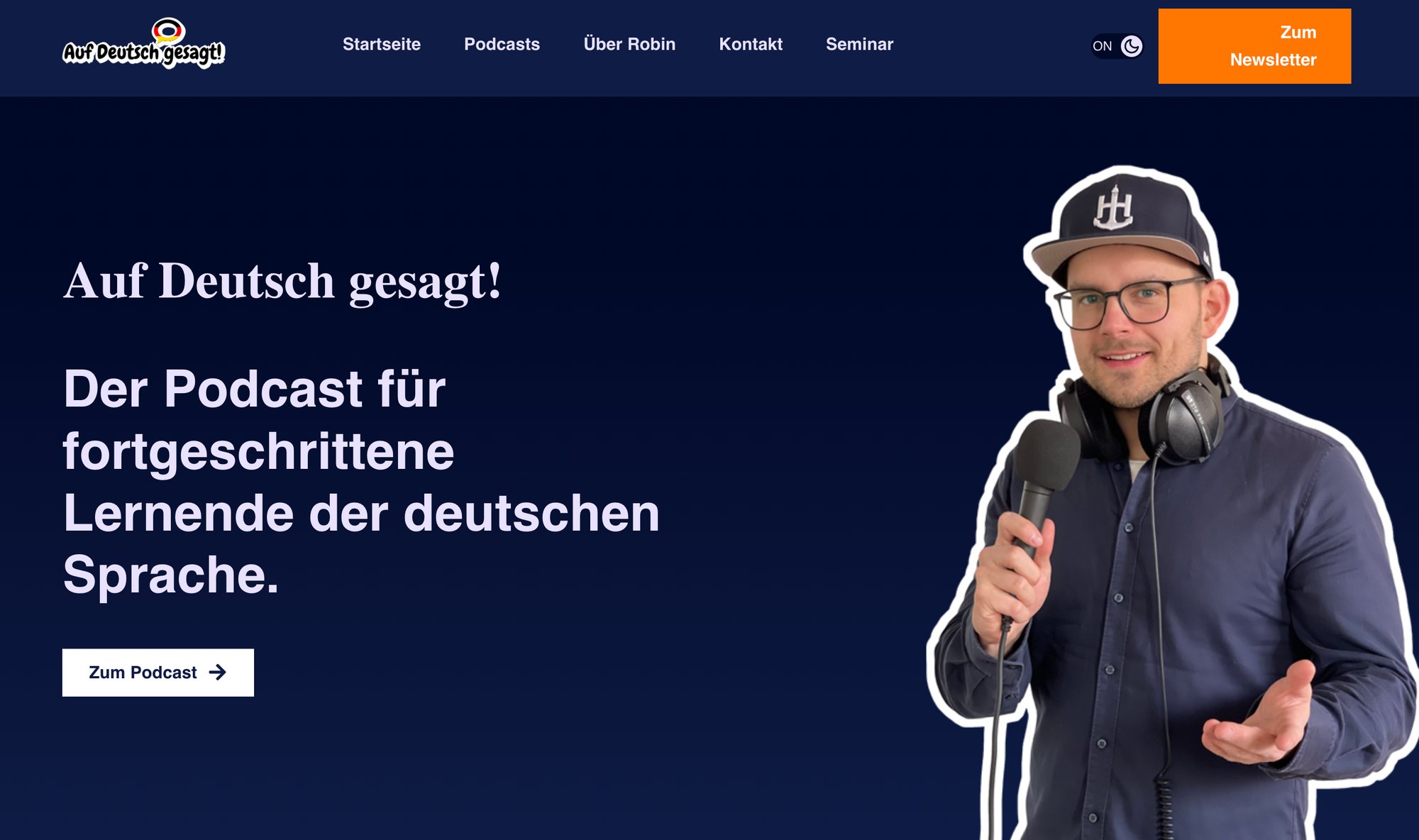
This is the bridge to fluency. Host Robin Meinert created this podcast specifically for advanced learners who are bored with "learner" content but find native radio too fast. He interviews interesting guests or talks about complex topics (like psychology or society) in authentic German.
The genius of this show is the Sprachanalyse (Language Analysis) at the end of every episode. After the interview, Robin spends 10-20 minutes breaking down the difficult vocabulary, idioms, and slang expressions that came up during the conversation, explaining them in simpler German.
Best For & Practical Tips
Best for: Advanced learners (B2-C1) who want to expand their vocabulary.
Tip: Don't skip the analysis! That is where the real learning happens. He often explains "slang" that you won't find in a dictionary.
| Feature | Details |
|---|---|
| CEFR Level | B2-C1 |
| Access | Free |
| Transcripts | Available via Handout/Newsletter |
| Unique Offering | Deep-dive language analysis at the end of every episode |
Website: https://aufdeutschgesagt.de/
7. Goethe-Institut Podcasts

The Goethe-Institut is the official cultural institute of Germany, and they produce high-quality audio content. A standout is Goethe-Geschichten (Goethe Stories), which features short, engaging stories tailored for learners. They also have Popcast, which explores German pop music, offering a break from traditional grammar lessons.
These podcasts are professionally produced and often come with excellent supplementary materials like worksheets, as their primary goal is education.
Best For & Practical Tips
Best for: All levels (A1-C1) depending on the specific show.
Tip: Check their website for the "Radio D" archive if you are a beginner—it's an older audio drama series that is delightfully cheesy but very effective.
| Feature | Details |
|---|---|
| CEFR Level | Mixed (A1-C1) |
| Access | Free |
| Transcripts | Often available |
| Unique Offering | Culturally rich, institutionally backed educational content |
Website: https://www.goethe.de/en/kul/flm/pod.html
8. ARD Audiothek
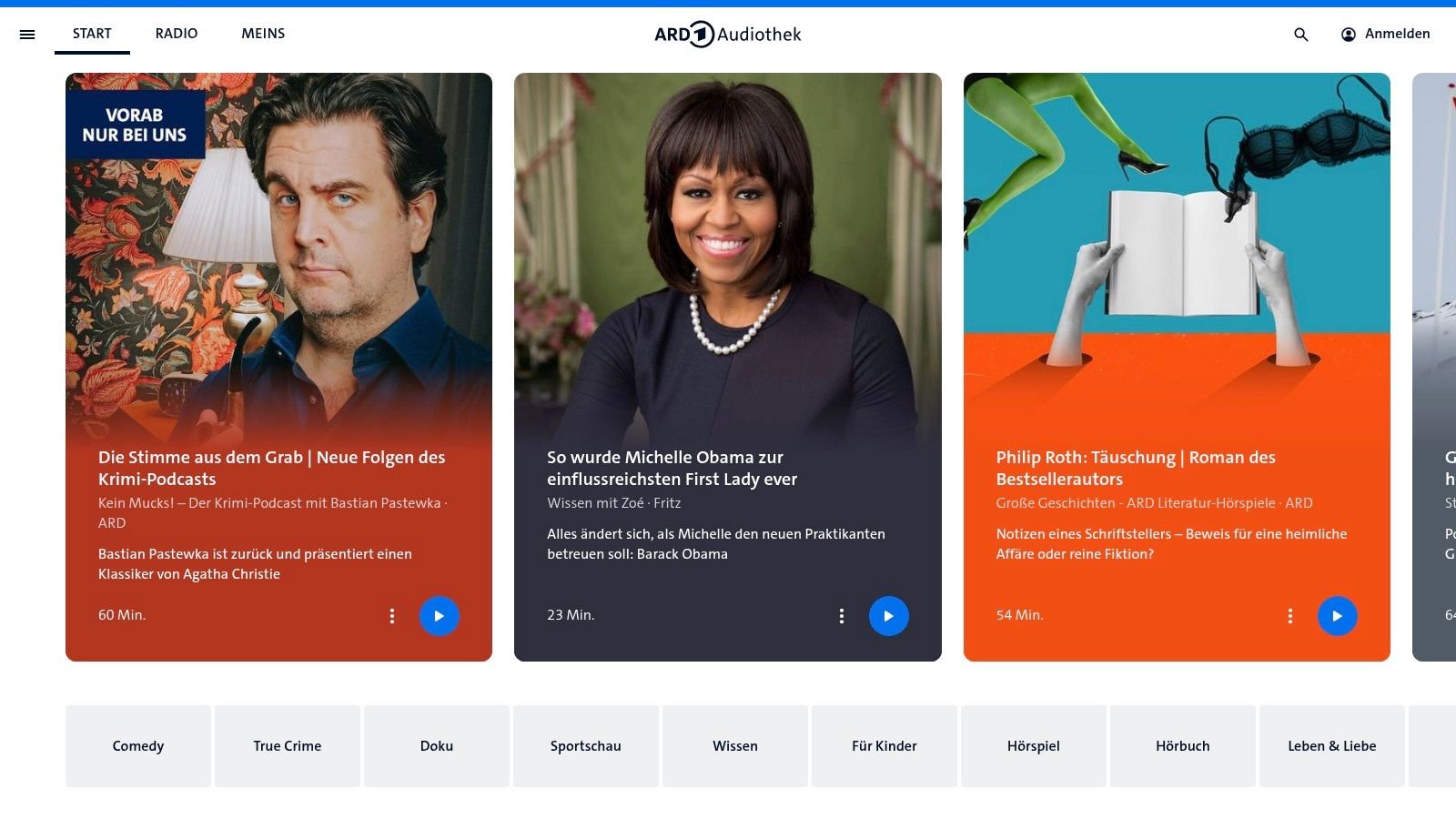
This is not a single podcast, but the digital library of the ARD (Germany's consortium of public broadcasters). It is essentially the "Netflix of German Audio." Here you will find thousands of high-quality, native-level productions: radio plays (Hörspiele), documentaries, crime thrillers (Tatort), and comedy.
It is the ultimate resource for immersion. There are no simplified sentences here; this is German for Germans. Shows like Zeitzeichen (history) or Tagesschau in 100 Sekunden (news) are excellent daily listens.
Best For & Practical Tips
Best for: Advanced learners (C1-C2) who want full immersion.
Tip: Search for "Hörspiel" (Radio Play). Germany has a massive culture of audio dramas that are incredibly high quality and great for getting lost in a story.
| Feature | Details |
|---|---|
| CEFR Level | C2 (Native) |
| Access | Free (App and Website) |
| Transcripts | Rarely available (Native content) |
| Unique Offering | Unlimited access to Germany's public radio archives |
Website: https://www.ardaudiothek.de/
9. podcast.de
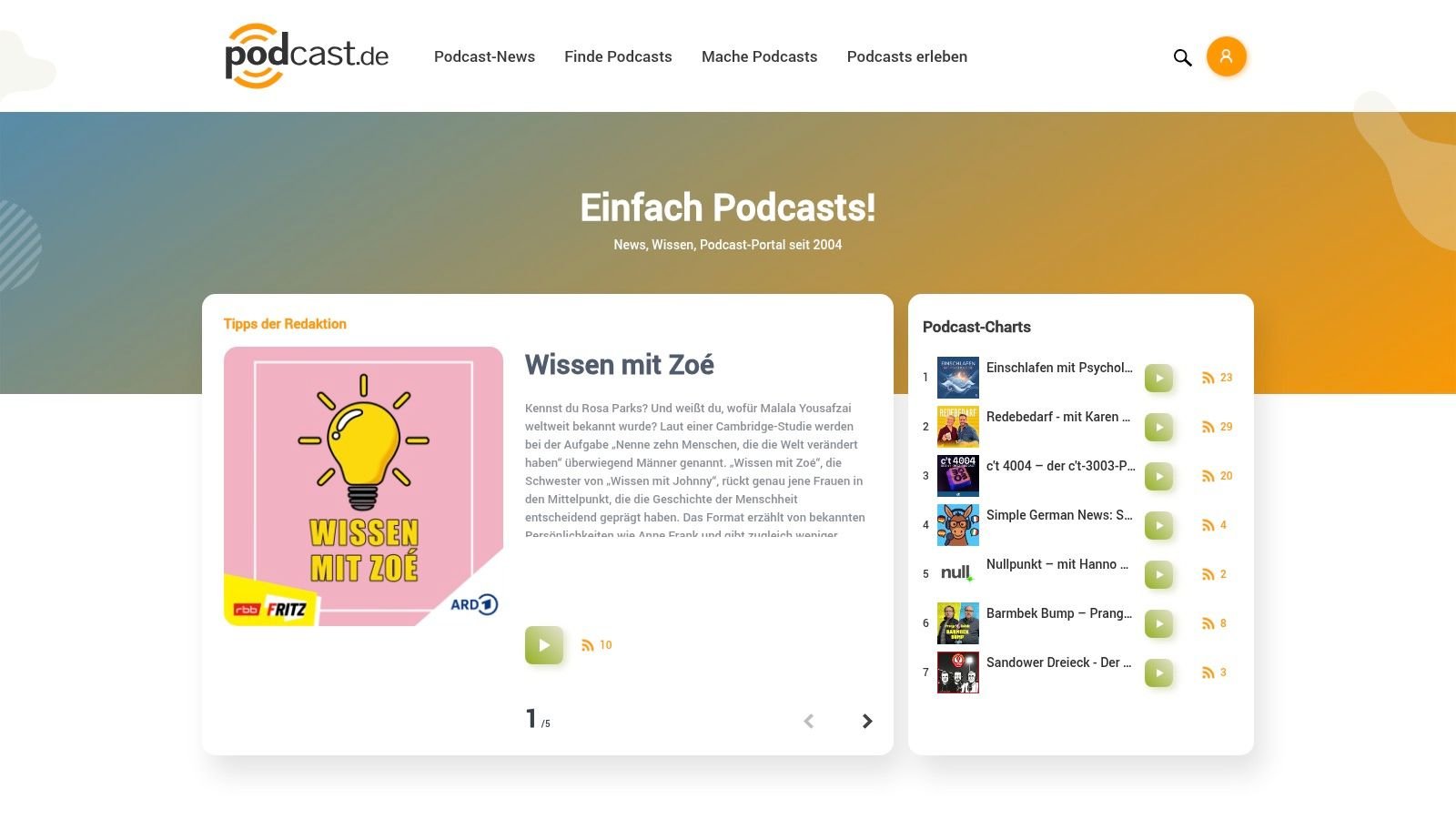
Think of this as the "Google" of German podcasts. It is one of the largest directories of podcasts in the German-speaking world. While not a show itself, it is an indispensable tool for finding niche content that interests you.
Whether you are into knitting, cars, tech, or true crime, you can find a native German podcast about it here. Finding content that matches your personal hobbies is one of the fastest ways to learn, as your interest in the topic will carry you through the difficult language.
Best For & Practical Tips
Best for: Intermediate to Advanced learners (B1+) looking for niche interests.
Tip: Use the category search to find a topic you know a lot about in your native language. If you love tech, find a German tech podcast. You will be surprised how much you understand because you already know the context.
| Feature | Details |
|---|---|
| CEFR Level | Mostly Native |
| Access | Free Directory |
| Transcripts | Varies by individual podcast |
| Unique Offering | Massive directory to find content matching your specific hobbies |
Website: https://www.podcast.de/
10. GermanPod101
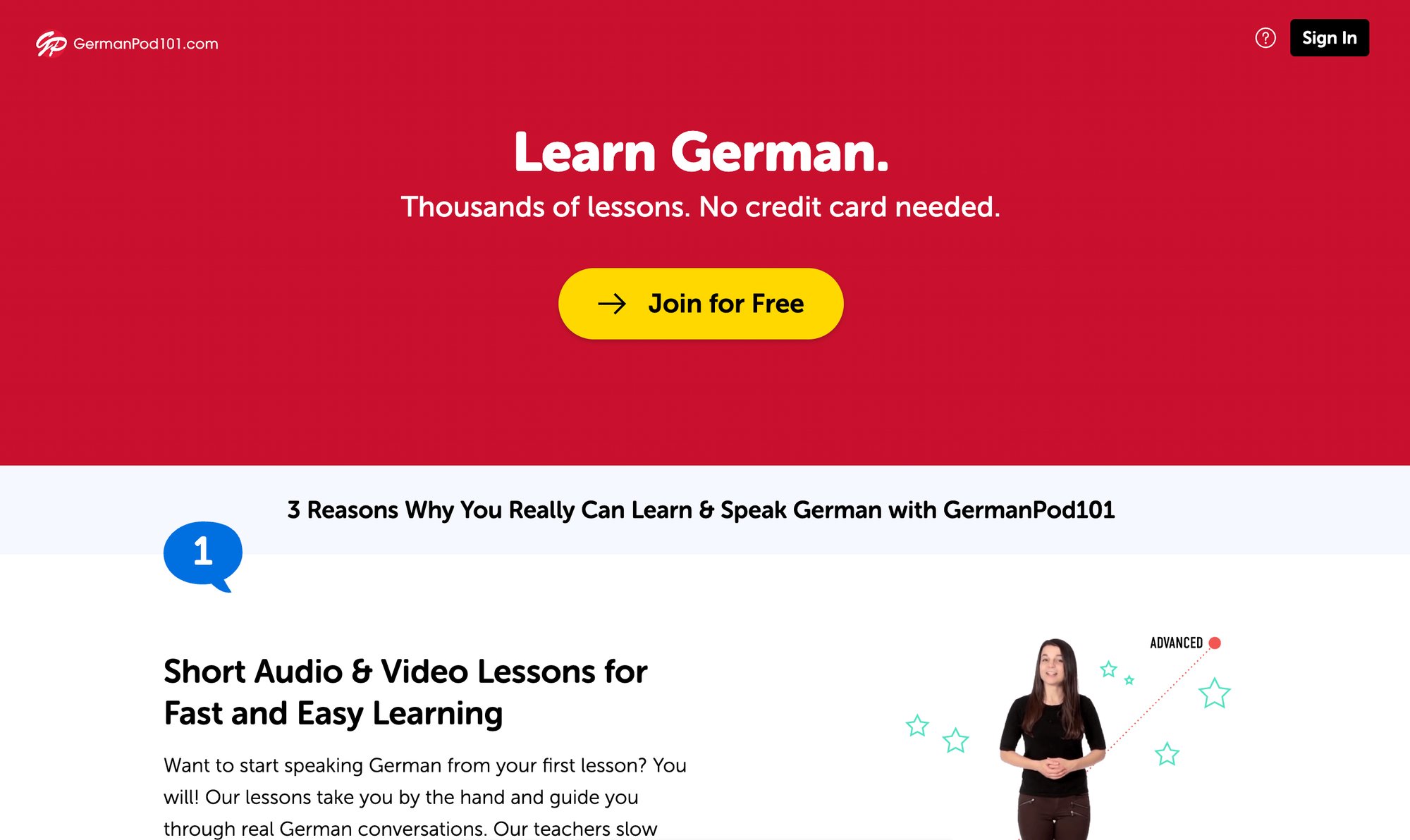
Like its Italian counterpart, GermanPod101 is a massive digital library rather than a simple podcast feed. It offers thousands of audio and video lessons categorized by every proficiency level imaginable. If you want to learn specific vocabulary—like "Business German" or "Flirting"—they likely have a dedicated module for it.
The lessons usually feature a short dialogue followed by a breakdown of the grammar and new words. It’s perfect for learners who want a "course" structure but want to jump around to topics that interest them. The accompanying app is robust, offering flashcards and PDF notes that sync with the audio.
Best For & Practical Tips
Best for: All levels (A1-C1), particularly useful for Beginners needing structure and Travelers needing survival phrases.
Tip: Use the "Line-by-Line Audio" feature in their app. It breaks the dialogue down into individual sentences that you can play on repeat, which is excellent for practicing pronunciation without the pressure of the full conversation.
| Feature | Details |
|---|---|
| CEFR Level | A1-C1 |
| Access | Freemium (Free lessons / Paid archive) |
| Transcripts | Interactive and PDF |
| Unique Offering | Extensive library with targeted modules (e.g., Business, Travel) |
Website: https://www.germanpod101.com/
11. Deutsches Geplapper
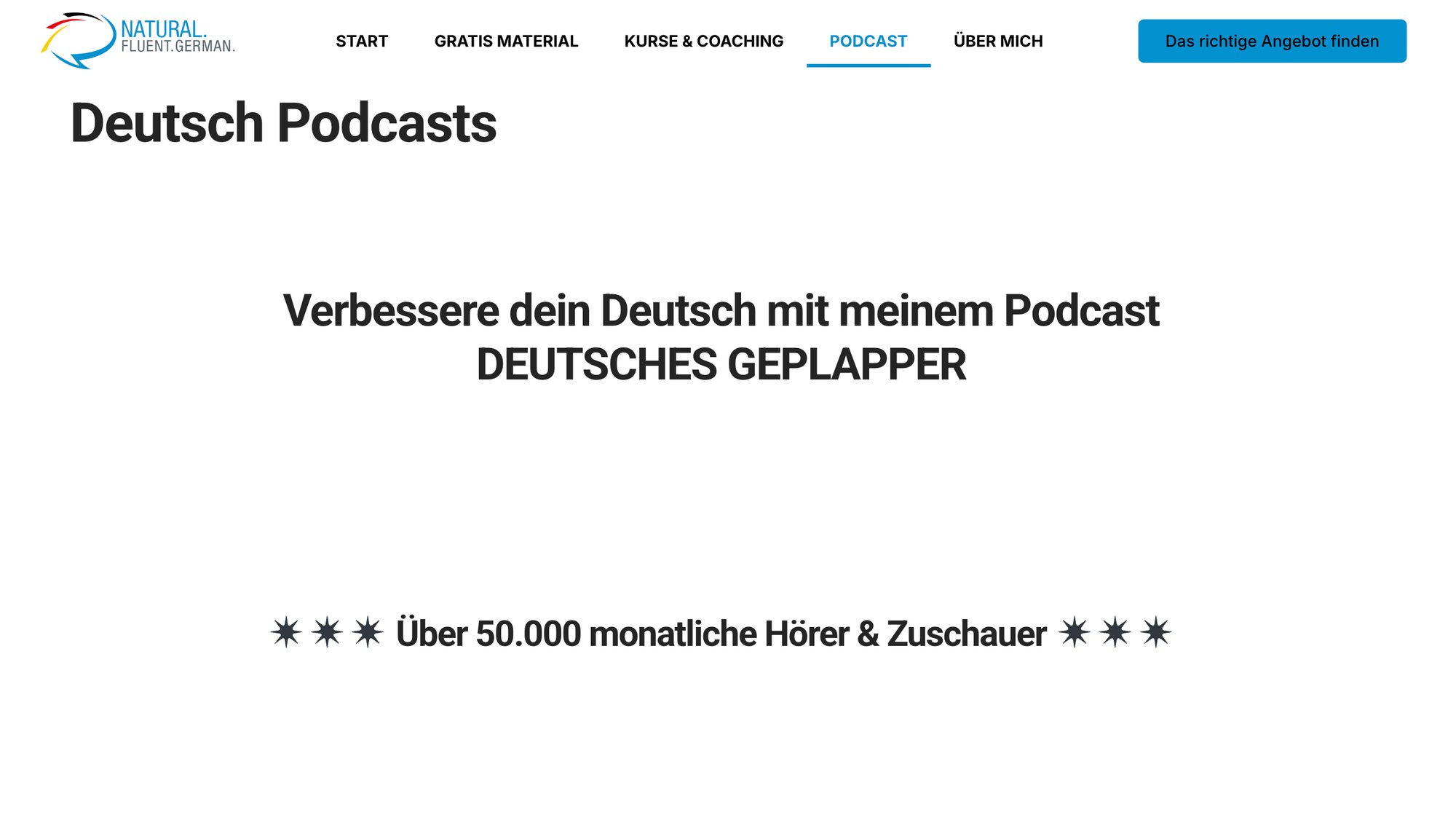
Hosted by Flemming, a native German coach, this podcast strikes a perfect balance between "educational" and "authentic." Flemming speaks naturally and covers interesting topics—from German history to modern work culture—but he does so with the learner in mind. He avoids the overly simplified "robot speak" of beginner resources but is clearer than a chaotic radio show.
The atmosphere is relaxed and conversational (hence the name "Geplapper," which means chatting or babbling). It feels like a safe space to get used to the rhythm of natural German. He often invites guests, giving you exposure to different voices and slight dialect variations.
Best For & Practical Tips
Best for: Intermediate learners (B1-B2) bridging the gap to advanced.
Tip: Flemming often provides vocabulary lists for his episodes. Try to listen to the episode once just for enjoyment, and then a second time while looking at the vocabulary list to catch the nuances you missed.
| Feature | Details |
|---|---|
| CEFR Level | B1-B2 |
| Access | Free |
| Transcripts | Available for supporters |
| Unique Offering | Authentic yet accessible conversations on diverse topics |
Website: https://naturalfluentgerman.com/podcastfolgen/
12. Deutsch mit Schmidt
This is a hidden gem for learners who love context. Host Schmidt takes a unique approach: each episode focuses on a specific set of advanced vocabulary words or grammar concepts. He introduces them, explains them, and then weaves them into a short, intriguing story.
This "Story-Context" method is incredibly effective. Instead of memorizing a list of words, you hear them applied in a narrative, which helps them stick in your memory. The stories are often creative and entertaining (sometimes involving spies or mysteries), which keeps you engaged while you learn complex B2/C1 vocabulary.
Best For & Practical Tips
Best for: Upper Intermediate to Advanced (B2-C1) learners focused on vocabulary expansion.
Tip: This is excellent for "active listening." Try to write down your own sentence using the featured word before he finishes the story to see if you truly grasped the meaning.
| Feature | Details |
|---|---|
| CEFR Level | B2-C1 |
| Access | Free |
| Transcripts | Available for patrons |
| Unique Offering | Vocabulary-focused storytelling |
Website: https://deutschmitschmidt.de/
Start Listening and Supercharge Your German Today
The core takeaway is this: passive listening is a start, but active engagement is where true progress happens. The most successful learners transform listening sessions into comprehensive study cycles. They do not just hear the words; they interact with them. This means choosing podcasts that genuinely capture your interest, because intrinsic motivation is the most powerful fuel for consistency.
From Passive Listener to Active Learner
To make this transition, you need a system. Relying on willpower alone is unsustainable. Instead, build a routine that integrates the active learning principles we have discussed throughout this article. A structured approach ensures you are consistently challenging yourself and reinforcing new knowledge.
Your action plan should include these key elements:
Strategic Selection: Do not just pick a popular podcast. Choose one that aligns with your current CEFR level (A2, B1, etc.) and, more importantly, a topic you find fascinating. Whether it's history, technology, or daily life in Germany, genuine interest will keep you coming back.
Transcript-Based Study: Always prioritize podcasts that provide transcripts (or use Lenguia to generate transcripts for any podcast). A transcript turns an audio stream into a rich, multimodal learning tool. Use it to follow along, look up unfamiliar words, and analyze sentence structures you find challenging.
Vocabulary Acquisition System: Do not let new words simply pass you by. Create a system for capturing and reviewing vocabulary. This could be a dedicated notebook, a digital flashcard app, or an integrated platform that helps you build a personal lexicon from the content you consume.
Active Recall and Production: Move beyond comprehension. Challenge yourself to summarize an episode in your own words, either by speaking aloud or writing a short paragraph. Try the shadowing technique, where you listen and repeat what the host says, to improve your pronunciation, rhythm, and intonation.
Ready to turn passive listening into a structured, effective learning system? Lenguia transforms your favorite german language podcasts and other authentic content into interactive transcripts, complete with vocabulary builders and smart review schedules. Stop just listening and start mastering German by visiting Lenguia to see how you can create personalized study materials from any text.