The Ultimate List of Irregular Verbs in Spanish: The Ones You Need to Master
Tackling Spanish grammar can feel like an uphill battle, especially when you encounter verbs that don't play by the rules. While regular verbs follow predictable patterns, irregular verbs are the wild cards that often trip up learners. A practical strategy is to focus on the right irregular verbs, as this is one of the most efficient ways to boost your comprehension and speaking confidence. Mastering these verbs is not just about memorization; it's about understanding the core of everyday communication.
In this guide, we both present you an extensive list sorted by importance as well as shorter, practical list of irregular verbs in spanish that you will encounter constantly in real conversations, stories, and podcasts. We will break down these most essential verbs, grouping them by their common patterns of irregularity to make them easier to learn. By understanding how these core verbs function in authentic contexts, you can transform your ability to both understand and express yourself in Spanish with greater accuracy and fluency.
1. The "Big Ones" (Totally Irregular)
These are the most frequent verbs in the language and follow no specific rules. They must be memorized first.
| Verb | Meaning | Key Irregularity (Present Tense) | Example Sentence |
|---|---|---|---|
| Ser | To be (permanent) | Soy, eres, es, somos, sois, son | Yo soy alto. (I am tall.) |
| Estar | To be (temporary/location) | Estoy, estás, está... | Ella está cansada. (She is tired.) |
| Ir | To go | Voy, vas, va, vamos, vais, van | Nosotros vamos a la playa. (We go to the beach.) |
| Haber | To have (auxiliary) | He, has, ha, hemos, habéis, han | No lo he visto. (I haven't seen it.) |
| Ver | To see | Veo (irregular yo form only) | No veo nada. (I don't see anything.) |
| Dar | To give | Doy (irregular yo form only) | Te doy mi palabra. (I give you my word.) |
2. The "Yo-Go" Verbs
These verbs have a "G" added to the first person singular (Yo), but are often regular in other forms.
| Verb | Meaning | Irregular "Yo" Form | Other Forms |
|---|---|---|---|
| Tener | To have | Tengo | Tienes, tiene... (also stem-changing) |
| Hacer | To do / To make | Hago | Haces, hace... |
| Decir | To say / To tell | Digo | Dices, dice... (also stem-changing) |
| Poner | To put | Pongo | Pones, pone... |
| Salir | To leave / To go out | Salgo | Sales, sale... |
| Venir | To come | Vengo | Vienes, viene... (also stem-changing) |
| Traer | To bring | Traigo | Traes, trae... |
| Oír | To hear | Oigo | Oyes, oye... (spelling change i -> y) |
| Caer | To fall | Caigo | Caes, cae... |
3. Stem-Changing Verbs (E → IE)
The "boot verbs." The e in the stem changes to ie in all forms except nosotros and vosotros.
| Verb | Meaning | Change Example (Yo/Tú/Él) | Regular Form (Nosotros) |
|---|---|---|---|
| Querer | To want | Quiero, quieres, quiere | Queremos |
| Pensar | To think | Pienso, piensas, piensa | Pensamos |
| Empezar | To start | Empiezo, empiezas, empieza | Empezamos |
| Entender | To understand | Entiendo, entiendes, entiende | Entendemos |
| Perder | To lose | Pierdo, pierdes, pierde | Perdemos |
| Sentir | To feel | Siento, sientes, siente | Sentimos |
| Preferir | To prefer | Prefiero, prefieres, prefiere | Preferimos |
| Cerrar | To close | Cierro, cierras, cierra | Cerramos |
4. Stem-Changing Verbs (O → UE)
The o in the stem changes to ue in all forms except nosotros and vosotros.
| Verb | Meaning | Change Example (Yo/Tú/Él) | Regular Form (Nosotros) |
|---|---|---|---|
| Poder | Can / To be able to | Puedo, puedes, puede | Podemos |
| Encontrar | To find | Encuentro, encuentras, encuentra | Encontramos |
| Dormir | To sleep | Duermo, duermes, duerme | Dormimos |
| Volver | To return | Vuelvo, vuelves, vuelve | Volvemos |
| Contar | To count / To tell | Cuento, cuentas, cuenta | Contamos |
| Recordar | To remember | Recuerdo, recuerdas, recuerda | Recordamos |
| Morir | To die | Muero, mueres, muere | Morimos |
| Mostrar | To show | Muestro, muestras, muestra | Mostramos |
5. Stem-Changing Verbs (E → I)
The e in the stem changes to i (mostly -IR verbs).
| Verb | Meaning | Change Example (Yo/Tú/Él) | Regular Form (Nosotros) |
|---|---|---|---|
| Pedir | To ask for | Pido, pides, pide | Pedimos |
| Seguir | To follow | Sigo, sigues, sigue | Seguimos |
| Servir | To serve | Sirvo, sirves, sirve | Servimos |
| Repetir | To repeat | Repito, repites, repite | Repetimos |
6. The "Z" Verbs (Verbs ending in -cer/-cir)
These add a Z before the C in the "Yo" form to preserve the sound.
| Verb | Meaning | Irregular "Yo" Form | Regular Forms |
|---|---|---|---|
| Conocer | To know (people/places) | Conozco | Conoces, conoce... |
| Conducir | To drive | Conduzco | Conduces, conduce... |
| Producir | To produce | Produzco | Produces, produce... |
| Traducir | To translate | Traduzco | Traduces, traduce... |
| Parecer | To seem | Parezco | Pareces, parece... |
| Nacer | To be born | Nazco | Naces, nace... |
The following offers a deep-dive into the most important irregular verbs in Spanish. We include tips on when to use them and how to study them
1. SER (To Be) - Essential Identity & Characteristics Verb
The verb SER is one of the two fundamental "to be" verbs in Spanish and a cornerstone of the language. It is profoundly irregular across nearly all tenses and moods, making it a priority for every learner. SER is used to express permanent or inherent qualities, including identity, origin, profession, relationships, and essential characteristics. Mastering its forms is a non-negotiable step toward fluency, as it helps define the very essence of people, places, and things.
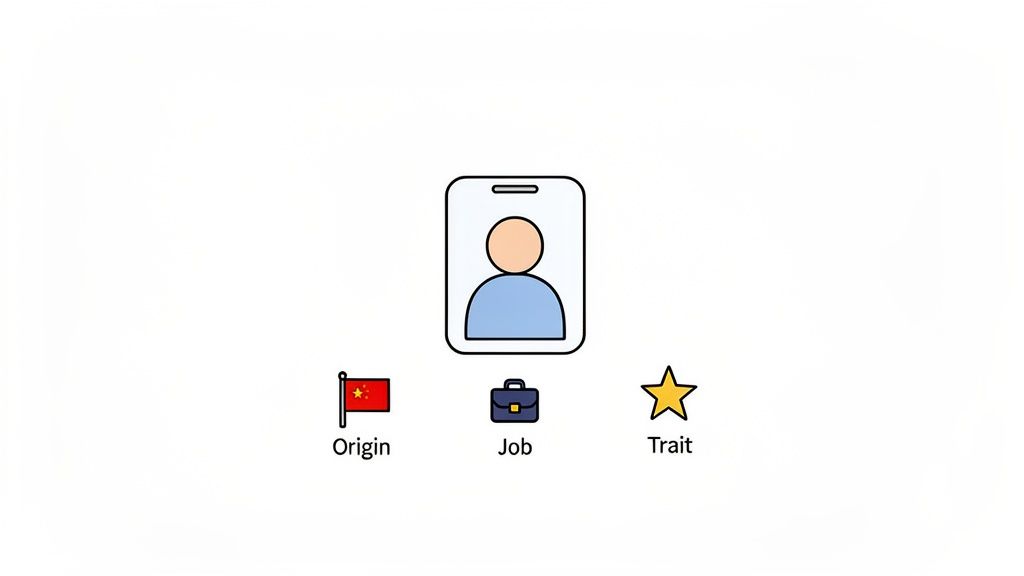
Unlike its counterpart ESTAR, which describes temporary states or locations, SER describes what something is at its core. This distinction is crucial and a frequent point of confusion, but contextual learning helps clarify it.
Common Contexts & Examples
Identity: Yo soy Carlos. (I am Carlos.)
Profession: Ella es médica. (She is a doctor.)
Origin: Nosotros somos de Argentina. (We are from Argentina.)
Characteristics: El libro es interesante. (The book is interesting.)
Time & Date: Hoy es martes. (Today is Tuesday.)
Relationships: Ellos son mis hermanos. (They are my brothers.)
The preterite (past tense) form of SER is identical to the verb IR (to go), which can be tricky. For example, “Fueron a la fiesta” can mean "They went to the party" (IR) or "They were the party [organizers, for instance]" (SER). Context is the only way to distinguish them.
Actionable Tips for Mastery
To effectively integrate SER into your active vocabulary, focus on contextual practice rather than rote memorization.
Describe Your World: Start with simple sentences describing yourself, your family, and your possessions. For example: “Yo soy estudiante. Mi casa es azul. Mis padres son amables.” This reinforces the most common forms: soy, es, and son.
Use Contextual Flashcards: Create flashcards with full sentences that highlight SER's role in describing identity or characteristics, not just the conjugated verb.
Read and Listen Actively: Pay close attention to how native speakers use SER in stories and conversations. This method of learning grammar through context is highly effective. If you're interested, you can explore how to learn Spanish grammar without studying rules to see how this approach works in practice.
2. ESTAR (To Be) - Location & Temporary State Verb
The verb ESTAR is the second half of the "to be" puzzle in Spanish and is just as vital as SER. While its irregularities are different, particularly in the present and preterite tenses, mastering it is crucial for expressing location, temporary conditions, and ongoing actions. ESTAR is used to describe how something is or where it is at a given moment, rather than what it fundamentally is.
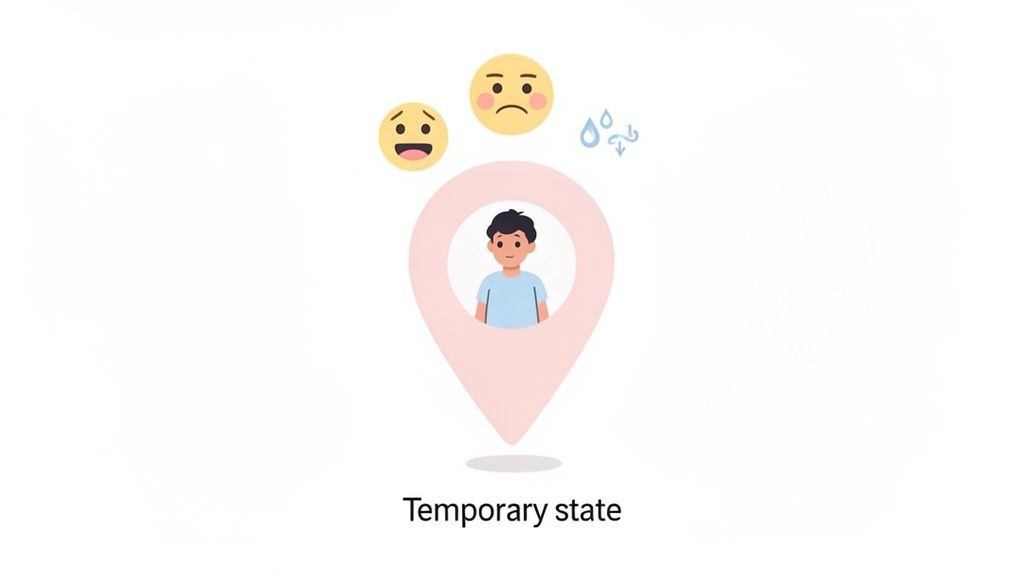
This distinction between the temporary nature of ESTAR and the permanent essence of SER is one of the most important concepts for any Spanish learner. Understanding when to use ESTAR helps provide clarity and context, whether you're describing your mood, your physical location, or what you are currently doing. Its place on any list of irregular verbs in Spanish is undisputed due to its high frequency and unique conjugation patterns.
Common Contexts & Examples
Location: Yo estoy en la casa. (I am in the house.)
Temporary Emotional/Physical States: Ella está nerviosa. (She is nervous.)
Present Progressive (actions in progress): Nosotros estamos leyendo un libro. (We are reading a book.)
Past Location/State: Él estuvo en Madrid durante una semana. (He was in Madrid for a week.)
Conditions/Results: La ventana está rota. (The window is broken.)
The preterite tense of ESTAR (estuve, estuviste, estuvo) is highly irregular and follows a pattern shared by other verbs like tener and andar, making it a key pattern to recognize.
Actionable Tips for Mastery
To master ESTAR, focus on associating it with temporary situations and practicing the SER/ESTAR contrast directly.
Create Mental Associations: A simple trick is to associate ESTAR with "LOCATION + condition". Think of the phrase "How you feel and where you are, that is when you use ESTAR."
Use Paired Sentences: Practice by writing paired sentences that highlight the difference between SER and ESTAR. For example: "Soy aburrido" (I am a boring person) versus "Estoy aburrido" (I am bored right now). This clarifies how the verb choice changes the entire meaning.
Focus on Present Progressive: Actively form sentences about what you are doing at this very moment using the "ESTAR + -ando/-iendo" structure. For instance: "Estoy escribiendo", "Estoy escuchando música." This reinforces the estoy, estás, and está forms naturally.
Listen for Contextual Clues: When listening to Spanish podcasts or watching shows, pay close attention to how speakers use ESTAR to describe settings, character emotions, and ongoing scenes. This contextual learning is far more effective than just memorizing charts.
3. TENER (To Have) - Possession & Obligation Verb
The verb TENER is one of the most frequently used irregular verbs in Spanish, serving as a pillar for expressing possession, age, and obligation. Its irregularities are prominent across multiple tenses, particularly in the present indicative (the yo-go form and stem changes) and the preterite. Mastering TENER is fundamental for moving beyond basic sentences and constructing more complex, meaningful expressions.
Unlike the English "to have," TENER's role extends far beyond simple ownership. It is integral to a wide range of idiomatic expressions and grammatical structures that are central to daily communication, making it a crucial verb for any intermediate learner to master in this list of irregular verbs in Spanish.
Common Contexts & Examples
Possession: Yo tengo un libro nuevo. (I have a new book.)
Age: Ella tiene 30 años. (She is 30 years old.)
Obligation (TENER que + Infinitive): Nosotros tenemos que terminar el proyecto. (We have to finish the project.)
Physical Sensations: Él tiene frío. (He is cold.)
Past Actions (Preterite): ¿Qué tuvieron que hacer ayer? (What did they have to do yesterday?)
Gerund Usage: Teniendo en cuenta su experiencia, es el mejor candidato. (Taking into account his experience, he is the best candidate.)
A key point of confusion for learners is distinguishing between TENER (to have) and HAY (there is/are). Remember, TENER indicates that a specific subject possesses something, while HAY simply states the existence of something.
Actionable Tips for Mastery
To internalize the versatile uses of TENER, focus on building context around its core functions of possession and obligation.
Create Character Profiles: Use a journal to describe fictional characters or people you know. Write sentences like: “Mi personaje tiene pelo castaño, tiene dos hermanos y tiene que encontrar un tesoro.” This reinforces possession, characteristics, and obligation in a narrative context.
Practice with an AI Coach: Use a language learning tool to practice forming sentences with tener que + infinitive. Focus on creating commands or describing daily obligations to solidify the structure in your mind.
Distinguish from HAY with Flashcards: Create flashcards that force you to choose between TENER and HAY. For example, one side could say “The house ____ a big garden” (La casa tiene…) versus “____ a big garden in the city” (Hay un jardín…).
Listen for It in Podcasts: Pay close attention to how native speakers use TENER when introducing characters or describing situations in comprehensible input podcasts. Notice how often tengo, tienes, and tiene appear in everyday conversation.
4. HACER (To Do/Make) - Action & Time Expression Verb
The verb HACER is one of the most versatile and frequently used irregular verbs in the Spanish language. Its core meanings of "to do" or "to make" branch out into a wide range of essential expressions, particularly those related to actions, creation, weather, and the passage of time. Its significant irregularity, especially in the present yo form (hago) and the entire preterite tense, makes it a key verb for intermediate learners to master.
HACER's flexibility allows it to describe everything from a simple daily task to an abstract concept. Because of its broad utility, understanding its various forms and common uses is a major step toward building more complex and natural-sounding sentences, making it a vital part of any comprehensive list of irregular verbs in Spanish.
Common Contexts & Examples
Daily Actions & Tasks: Yo hago la tarea todos los días. (I do my homework every day.)
Creation/Production: Ellos están haciendo un pastel. (They are making a cake.)
Narrative Actions (Past): ¿Qué hizo ella ayer? (What did she do yesterday?)
Weather Expressions: Hace mucho calor en verano. (It is very hot in summer.)
Time Expressions (Duration): Hace tres años que vive aquí. (He has lived here for three years.)
The preterite tense of HACER is particularly challenging due to its stem change to *hic-/hiz-. For example, yo hice, tú hiciste, él/ella/usted hizo. Note the spelling change from 'c' to 'z' in the third-person singular (hizo) to maintain the soft 's' sound.
Actionable Tips for Mastery
To master HACER, focus on its multiple functions through practical application rather than just memorizing conjugation charts.
Track Actions in Stories: When engaging with comprehensible input, pay close attention to how HACER is used to describe actions that drive the narrative forward. This contextualizes its preterite forms naturally.
Create a Weather Chart: Make a simple visual chart connecting hace with common weather words: hace calor, hace frío, hace viento, hace sol. This helps solidify its use as a set phrase.
Master Time Expressions: Treat the structure "hace + [time period] + que..." as a single vocabulary unit. Use spaced repetition systems to practice creating sentences about how long you have been doing certain activities.
Journal Your Daily Routine: Using HACER in the present tense is perfect for describing daily tasks. Regularly writing about your day reinforces the hago, haces, and hace forms. To refine this skill, you can explore tips on how to write in Spanish and improve your journaling practice.
5. IR (To Go) - Movement & Narrative Progression Verb
The verb IR is a fundamental and highly irregular Spanish verb used to express movement, direction, and future plans. Its forms are often completely different from its infinitive, making it a key verb to memorize early on. IR is essential for everyday communication, from discussing daily routines to outlining future actions, placing it among the most frequently used verbs in the entire language.

Beyond simple movement, IR is critical for forming the informal future tense (ir + a + infinitive), which is extremely common in spoken Spanish for expressing intentions and near-future events. Its high frequency in narratives makes mastering it crucial for understanding how stories and events unfold.
Common Contexts & Examples
Daily Routine: Yo voy a la escuela todos los días. (I go to school every day.)
Asking for Direction: ¿Adónde vas? (Where are you going?)
Near Future Prediction: Va a llover mañana. (It is going to rain tomorrow.)
Narrative Movement: Ellos fueron al parque ayer. (They went to the park yesterday.)
Reflexive Action (Leaving): Él se fue sin decir nada. (He left without saying anything.)
One of the most common challenges is distinguishing the preterite forms of IR from those of SER, as they are identical (fui, fuiste, fue, fuimos, fueron). For example, “Ella fue la primera” could mean "She was the first" (SER) or "She went first" (IR). The surrounding context is the only reliable way to determine the correct meaning.
Actionable Tips for Mastery
To master IR, focus on its function as a verb of movement and planning. Associating its forms with actions will make them more intuitive.
Master the Future Tense Unit: Treat the ir + a + infinitive structure as a single vocabulary chunk. Practice forming sentences about your own plans: “Mañana voy a estudiar español” or “El fin de semana vamos a ver una película.”
Create Movement Associations: Link each conjugation to a physical action. When you see voy, think "I am going." When you hear vamos, imagine a group moving together. This builds a direct mental connection.
Focus on Context Clues: When reading, actively look for context that differentiates preterite IR from SER. If a destination is mentioned (al mercado, a la fiesta), it is almost certainly IR. If a characteristic is described (muy simpáticos, la jefa), it is SER.
Journal Your Plans: Write short daily or weekly journal entries about what you are going to do. Using the “Voy a…” structure repeatedly in a meaningful, personal context will solidify the present tense forms and their future application.
6. VER (To See) - Perception & Comprehension Verb
The verb VER is a fundamental part of a comprehensive list of irregular verbs in Spanish, used to express both physical sight and metaphorical understanding. While its irregularities are less widespread than those of verbs like SER or IR, they appear in crucial, high-frequency forms that every learner must know. VER is essential for describing observations, comprehension, and visual elements in stories, making it a key verb for engaging with narrative content.
Mastering VER allows you to articulate not just what you see with your eyes, but also what you grasp with your mind. This dual function makes it a versatile and indispensable tool for communication, bridging the gap between perception and comprehension.
Common Contexts & Examples
Direct Visual Perception: Yo veo un pájaro en el árbol. (I see a bird in the tree.)
Past Observation: Nosotros no vimos la película anoche. (We didn't watch the movie last night.)
Comprehension: *¿*Ves lo que quiero decir? (Do you see what I mean?)
Observation of an Action: Ellos vieron a los niños jugando en el parque. (They saw the children playing in the park.)
Common Conversational Phrase: A ver... déjame pensar. (Let's see... let me think.)
The primary irregularities for VER are found in the first-person present indicative (veo instead of the expected vo), the entire preterite tense (vi, viste, vio, vimos, visteis, vieron), and the imperfect subjunctive (viera, vieras). Its past participle, visto, is also irregular.
Actionable Tips for Mastery
To master VER, focus on its dual meaning of sight and understanding through practical application.
Track Sensory Descriptions: When engaging with Spanish texts or audio, actively track how VER is used to describe what characters see. This practice is a great way to improve your reading comprehension skills by focusing on perspective.
Distinguish Literal vs. Metaphorical: Create sentences that highlight both uses. For example: *“*Veo un libro en la mesa” (literal vision) versus *“*Veo el problema con este plan” (metaphorical understanding).
Focus on the Preterite: The preterite forms (vi, viste, vio) are very common. Use interactive flashcards or write a short paragraph about what you saw yesterday to reinforce these conjugations in context.
Create a Personal Phrase List: Keep a running list of useful phrases like “Veo que...” (I see that...), “No veo por qué...” (I don't see why...), and “¿Ves lo que pasa?” (Do you see what's happening?). This builds conversational fluency.
7. PODER (To Can/Be Able) - Ability & Permission Verb
The verb PODER is a highly versatile and common irregular verb that expresses ability, possibility, or permission. As a key part of any comprehensive list of irregular verbs in Spanish, its mastery is essential for moving beyond basic statements. PODER is a stem-changing verb where the "o" in the stem changes to "ue" in most present tense forms (puedo, puedes, puede, pueden). It also has a significant irregularity in the preterite tense, adopting a "u" stem (pude, pudiste, pudo).
Understanding PODER allows you to discuss what is possible, what you are capable of doing, and how to politely ask for permission. It's a foundational verb for expressing capabilities and making arrangements, appearing constantly in both everyday conversation and formal writing.
Common Contexts & Examples
Ability: Yo puedo hablar tres idiomas. (I can speak three languages.)
Permission: *¿*Puedo usar tu teléfono? (Can I use your phone?)
Possibility: Puede que llueva más tarde. (It might rain later.)
Arrangements: Nosotros podemos vernos mañana. (We can see each other tomorrow.)
Past Inability/Failure: Ellos no pudieron encontrar la casa. (They couldn't find the house.)
A crucial distinction exists between the imperfect and preterite past tenses. “Podía” (imperfect) describes a general past ability, like “Cuando era niño, podía correr muy rápido” (When I was a kid, I could run very fast). In contrast, “pudo” (preterite) often implies a specific instance of success or failure: “Finalmente pudo abrir la puerta” (He finally managed to open the door).
Actionable Tips for Mastery
To master PODER, focus on its common patterns and the subtle differences in meaning across tenses.
Focus on the Stem-Change Pattern: Drill the "o → ue" change in the present tense, but remember that the nosotros and vosotros forms are regular: podemos, podéis. This is a common pattern among Spanish verbs.
Write About Your Abilities: Create sentences about your skills and limitations. Start journal entries with phrases like “Ahora puedo…” (Now I can…) or “Todavía no puedo…” (I still can’t…) to practice the most common form, puedo.
Practice Making Polite Requests: Use PODER in role-playing or conversations to ask for things. Practice forming questions like “¿Puedes ayudarme?” (Can you help me?) or “¿Podríamos empezar?” (Could we start?). This builds conversational fluency.
Listen for Context: When listening to native speakers, pay attention to whether PODER implies ability, permission, or possibility. Noting how it's used in different scenarios will help you internalize its various meanings.
8. DECIR (To Say/Tell) - Communication & Narrative Verb
The verb DECIR is a cornerstone of Spanish communication and storytelling, essential for expressing speech, opinions, and commands. As a highly irregular verb, it features significant changes in its stem and endings across multiple tenses, making its mastery a key milestone for learners. DECIR is used to report information, tell stories, and engage in dialogue, appearing constantly in both spoken and written Spanish.
DECIR is classified as an e→i stem-changing verb in the present tense, but its irregularities extend far beyond that simple rule. The first-person present (digo), the entire preterite tense (dije, dijiste, dijo), and the future/conditional stems (dir-), all deviate from standard patterns. Understanding its forms is fundamental for narrative comprehension and effective conversation.
Common Contexts & Examples
Stating a fact: Yo digo la verdad. (I tell the truth.)
Asking a question: ¿Qué dices? (What are you saying?)
Indirect speech: Él dijo que no podía venir. (He said he couldn't come.)
Giving a command: *¡*Dime la respuesta! (Tell me the answer!)
Expressing surprise: ¡No me digas! (You don't say! / Don't tell me!)
Future promise: Te diré un secreto mañana. (I will tell you a secret tomorrow.)
The distinction between the present dice (he/she says) and the preterite dije (I said) or dijo (he/she said) is crucial for understanding the timing of events in a narrative. These forms act as markers that frame who is speaking and when.
Actionable Tips for Mastery
To master DECIR, focus on its function within communication and stories rather than just memorizing conjugation tables.
Practice Reported Speech: Repeatedly form sentences using the structure “Él/ella dijo que…” (He/she said that…). This reinforces the irregular preterite forms and prepares you for more complex indirect speech, a vital part of any list of irregular verbs in Spanish.
Master the Future Stem: Create flashcards specifically for the irregular future and conditional forms: diré, dirás, dirá, diremos, dirán and diría, dirías, diría, etc. Use them in sentences about promises or hypothetical situations.
Analyze Dialogue: When reading or listening to Spanish content, actively highlight every instance of DECIR. Pay attention to how it is used to attribute speech and move the narrative forward. This helps you internalize its patterns through context.
Write Your Own Dialogue: Use a journal to write short conversations between two people. Focus on correctly using digo, dices, dice, dije, and dijo to show who is speaking and in what tense.
Comparison of 8 Key Irregular Spanish Verbs
| Verb (meaning) | Complexity 🔄 | Resource requirements ⚡ | Expected outcomes ⭐ | Ideal use cases 📊 | Key advantages & tips 💡 |
|---|---|---|---|---|---|
| SER (Essential Identity & Characteristics) | High: completely irregular present; many irregular tenses; preterite shared with IR. | High exposure + repetition: flashcards, comprehensible input stories, AI coach. | ⭐ Core ability to state identity, origin, profession, permanent traits. | Introductions, character descriptions, nationality, defining statements. | 💡 Reinforce "soy/es/son" in context; practice distinguishing SER vs ESTAR. |
| ESTAR (Location & Temporary State) | Moderate-High: irregular present (accents) and preterite stem (estuv-). | Contextual reading/listening, highlight ESTAR instances, roleplay location/emotion. | ⭐ Accurate expression of location, temporary states, progressives. | Locations, emotions/conditions, present progressive in narratives. | 💡 Learn rule "location + condition"; contrast with SER in paired sentences. |
| TENER (Possession & Obligation) | Moderate: present stem change (teng-/tien-), irregular preterite (tuv-). | Flashcards, character profiles, practice "tener que + infinitive", journaling. | ⭐ Express possession, age, obligations; high communicative value. | Possession, age expressions, obligations, character attributes. | 💡 Distinguish from HAY; practice "tengo que..." as a chunk; use frequent exposure. |
| HACER (Action & Time Expression) | Moderate: irregular yo (hago), preterite hic-/hiz-, orthographic C→Z. | Charts for weather/time, spaced repetition, narrative practice. | ⭐ Describe actions, weather, durations; strong narrative utility. | Daily routines, weather/time phrases, causative/passive uses (B1+). | 💡 Memorize "hice" forms; treat "hace + time" as a unit; track in stories. |
| IR (Movement & Narrative Progression) | High: completely irregular present; preterite = SER preterite (fui, fue). | Repetition, highlight "ir + a + infinitive", contextual disambiguation practice. | ⭐ Express movement, plans (near future), and plot progression. | Movement, plans (going to), narrative transitions. | 💡 Master "voy" associations; learn "ir + a" as single phrase; use context to disambiguate preterite. |
| VER (Perception & Comprehension) | Low-Moderate: irregular yo (veo) and imperfect (veía); otherwise regular. | Practice preterite/imperfect, track sensory descriptions in input. | ⭐ Express seeing, perception, and understanding; supports narration. | Observations, comprehension queries, reporting scenes. | 💡 Differentiate literal vs. figurative "ver"; drill "vi/viste/vio" forms. |
| PODER (Ability & Permission) | Moderate: present stem change o→ue; preterite pud- irregular with semantic shift. | Pattern-focused practice, flashcards, roleplay requests and permissions. | ⭐ Express ability, permission, possibility; practical in dialogue. | Requests, abilities, arrangements, expressing possibilities. | 💡 Note "pude" = managed to; emphasize "podemos" regularity; practice "¿Puedes...?". |
| DECIR (Communication & Narrative) | High: e→i stem, preterite dij- irregular, irregular future (dir-). | Intensive review, highlight dialogue, flashcards for irregular stems/future. | ⭐ Report speech and dialogue; essential for narrative comprehension. | Direct/indirect speech, storytelling, commands and exclamations. | 💡 Practice "dijo que..." patterns; learn "diré" forms; write dialogues using DECIR. |
Your Next Steps: Turning Knowledge into Natural Spanish
You have navigated through the core of Spanish fluency: the most common and crucial irregular verbs. Confronting this list of irregular verbs in Spanish is a significant milestone for any intermediate learner. The charts, examples, and patterns laid out in this article are not just grammar rules to be memorized; they are the very building blocks of authentic, natural-sounding communication. We've seen how verbs like ser, estar, tener, and hacer don't just express actions, they frame our understanding of identity, state, possession, and creation in the Spanish-speaking world.
The primary takeaway is that mastery doesn't come from brute-force memorization alone. True fluency blossoms from recognizing these verbs in context and gradually, intentionally, weaving them into your own speech and writing. Your brain is a pattern-recognition machine, and the most effective way to train it is through consistent, comprehensible input. This means shifting your focus from "studying" verbs to "using" them through immersion.
From Passive Knowledge to Active Skill
The journey from recognizing a word like fui to using it effortlessly in conversation requires a strategic approach. It's about building strong neural pathways so that the correct form comes to mind without hesitation.
Here are three actionable steps you can take today to internalize the verbs from this list:
Targeted Listening and Reading: Choose one verb from our list, for example, poder. For the next few days, make it your mission to notice every time you hear or read puedo, pudo, podría, or pueda. Listen to Spanish podcasts or read short stories with this specific goal in mind. This focused attention will make the verb's various forms "pop out" from the text, cementing their usage patterns in your mind.
Low-Stakes Production: Start a simple journal or use a language exchange app to practice writing sentences with these verbs. Don't aim for perfection. The goal is to simply produce the language. For instance, write three sentences about your day using the preterite forms of ir, tener, and decir. "Hoy fui al mercado. No tuve mucho tiempo. Le dije hola a mi vecino." This simple act of retrieval is far more powerful than just reading a chart.
Contextual Flashcards: Instead of making flashcards with single words (e.g., "hacer" - "to do"), create "contextual" flashcards. On one side, write a full sentence with the verb blanked out: "Ayer yo ________ la tarea" (hacer). On the other side, write the correct conjugated verb: "hice". This method forces your brain to recall the verb based on context, just as you would in a real conversation.
The Power of Patterns
Remember, while these verbs are "irregular," they are not entirely random. Recognizing the patterns we've discussed, such as the "yo-go" verbs (tengo, digo, hago), the preterite stem-changers (pude, tuve), and the subjunctive triggers, transforms a daunting list into manageable groups. As you encounter more Spanish, you will start to see these patterns repeat, making it easier to predict and use new verbs correctly.
Ready to see these irregular verbs used in compelling stories and conversations? Lenguia is designed to bridge the gap between knowing the rules and using the language naturally. Stop just studying lists and start absorbing Spanish through engaging, level-appropriate content on Lenguia!