What is the Best Way to Learn Spanish: A Practical Guide to Fluency
If you want to learn Spanish, the single most effective way is through comprehensible input. This means absorbing the language by understanding what you hear and read, not by memorizing grammar rules.
It is all about getting tons of listening and reading practice with material you can actually follow. This lets your brain absorb the language naturally, just like it did with your first one.
Why Understanding Always Beats Memorization
The traditional classroom method of grammar drills and vocabulary lists is like trying to learn how to swim by reading a textbook on fluid dynamics. You might know the theory, but you will sink the second you hit the water.
Comprehensible input is your swimming pool. It works because it is exactly how we all learned to speak as kids. We listened, gradually understood what people meant from context, and eventually started talking. We did not sit around studying verb charts, we just developed a feel for what sounded right.

Ditching the Drills for Real Immersion
When you focus on understanding, you build a deep, subconscious knowledge of Spanish. Instead of translating every word back to English in your head, you begin to think in Spanish. That shift is the key to fluency, and it is something rote memorization will never give you.
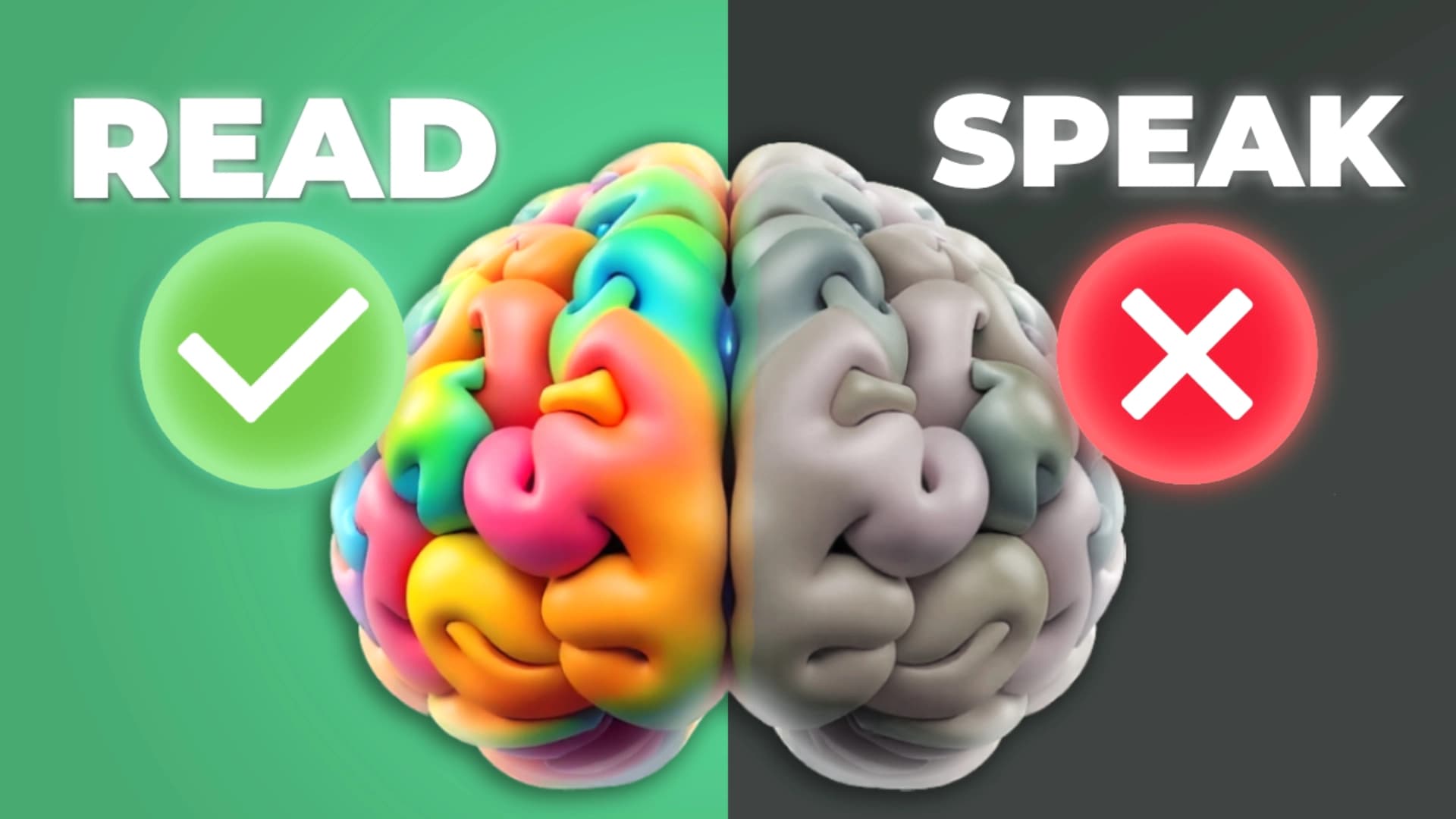
It is also how you avoid that common trap where you understand a second language but can't speak it.
The trick is finding material that is interesting and just a little bit above your current level. This keeps you engaged while you effortlessly pick up new words and sentence structures without feeling overwhelmed.
Here's a practical tip: Your goal isn't to understand every single word. It's to get the gist of the message. Over time, your brain will subconsciously fill in the gaps, acquiring grammar and vocabulary without the pain of conscious study.
Two Core Approaches to Learning Spanish
Let us put this natural method side-by-side with the old-school grammar-translation approach. It becomes clear why one builds real fluency while the other often just builds frustration.
Here is a quick breakdown of the two philosophies:
Two Core Approaches to Learning Spanish
| Feature | Comprehensible Input (CI) Method | Traditional Methods (Grammar-Translation/Drills) |
|---|---|---|
| Primary Focus | Understanding messages through listening and reading. | Memorizing explicit grammar rules and vocabulary lists. |
| Learning Process | Subconscious acquisition, like how you learned your first language. | Conscious study and analytical rule application. |
| Goal | Develop an intuitive feel for the language for natural communication. | Achieve grammatical accuracy through drills and translation. |
| Typical Activities | Reading graded readers, watching videos, listening to podcasts. | Verb conjugation drills, flashcards, sentence translation. |
Ultimately, the best way to get good at Spanish is to weave it into your daily life with content you actually enjoy. This guide will show you how to build that immersive environment and make your journey to fluency both effective and enjoyable.
Why Your Brain Loves Comprehensible Input
Traditional methods that force you to memorize abstract rules often work directly against how our minds are wired to learn. Our brains are incredible pattern-recognition machines, not rule-following calculators.
This is where comprehensible input comes in, and why it's the most effective way to learn Spanish. It is a concept from linguist Dr. Stephen Krashen, who proposed that we acquire a language in one primary way: by understanding messages. This means listening to and reading things that you can mostly follow, even if you do not know every single word.
Think of it like putting together a huge jigsaw puzzle. You would not study each tiny piece in isolation under a microscope. You would constantly glance at the picture on the box to see how it all fits together. That picture on the box is your context.
The Power of Context and Subconscious Learning
Comprehensible input provides that "big picture" for Spanish. When you listen to a story or read an article that you generally understand, your brain gets busy behind the scenes, making countless connections. It subconsciously figures out what new words mean and how sentences are built based on the surrounding context you already know.
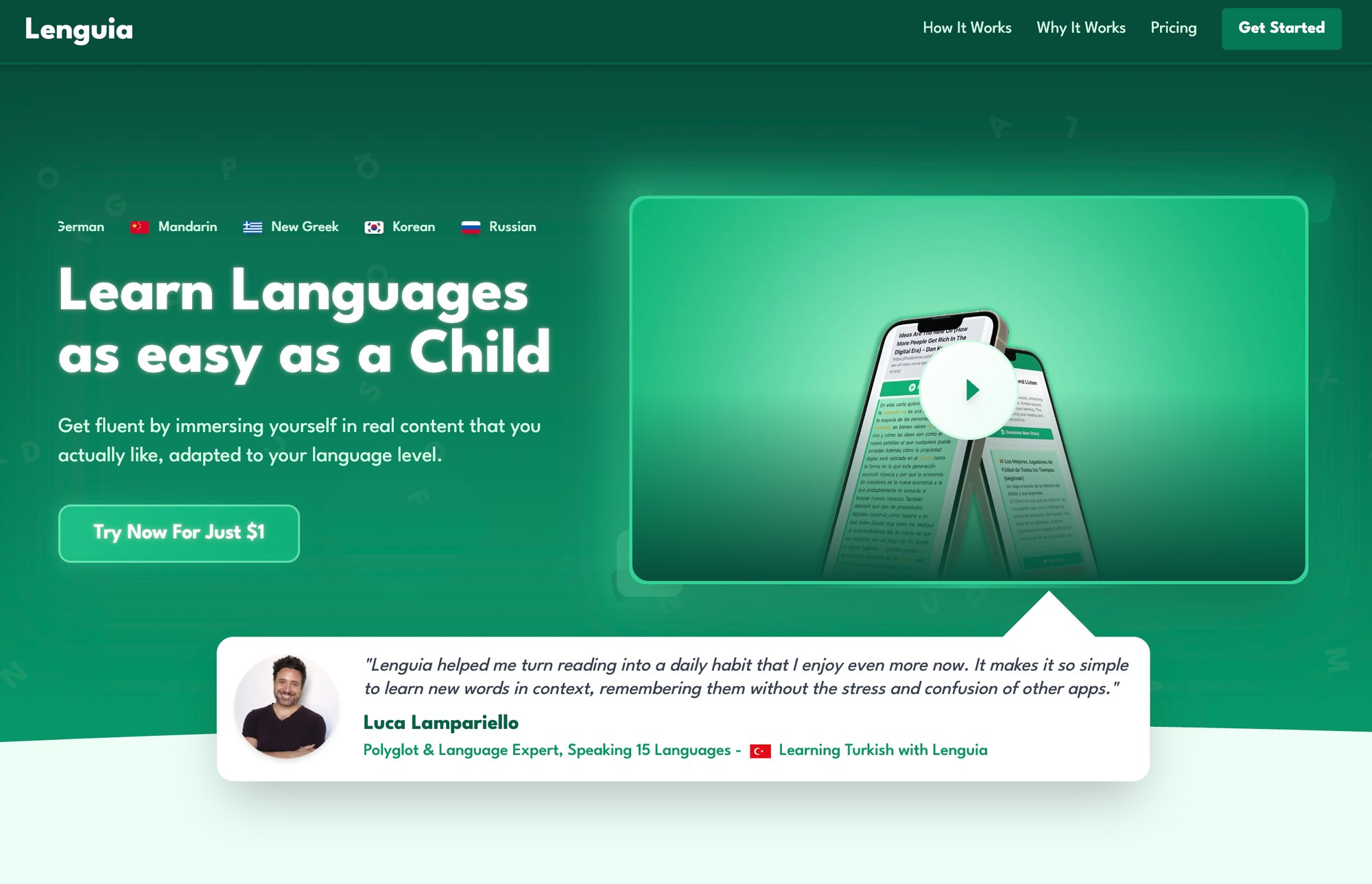
This is the entire philosophy Lenguia is built on, using AI to give you stories at your exact level, letting you simplify web articles, texts and entire books and providing you interactive transcripts for your language learning podcasts so that learning feels natural and intuitive.
This approach sidesteps one of the biggest roadblocks in language learning: the "affective filter." This is a term for the mental wall that goes up when we feel anxiety, self-consciousness, or stress. When you are constantly worried about making mistakes or remembering the right verb conjugation, that filter rises and blocks new information from sinking in.
A key strategy is to focus on understanding an interesting story instead of on your own performance. When you relax, your brain becomes more receptive to the language, and acquisition happens more naturally.
Building an Intuitive Feel for Spanish
This method helps you build a genuine, gut-level understanding of Spanish. It is the difference between knowing about the language and truly knowing the language. Someone who learned through grammar rules might be able to explain the subjunctive mood perfectly, but they will probably hesitate and stumble when trying to use it in a real conversation.
In contrast, a learner who has absorbed thousands of sentences through comprehensible input develops a "feel" for what sounds right. They use correct grammar not because they are consciously recalling a rule from a textbook, but because the alternative simply sounds wrong to them. This is the bedrock of real fluency.
You stop translating in your head. Instead of converting every sentence from English to Spanish, you start thinking directly in Spanish.
Vocabulary sticks better. Words you learn in the context of a memorable story are far more likely to stick around than words from a random flashcard list.
Grammar becomes second nature. You pick up grammatical structures organically, by seeing them used over and over in real communication.
Ultimately, the best way to learn Spanish is to engage with it in a way that is meaningful and understandable. This is the core principle of comprehensible input. For a deeper dive into the concept, check out our guide on what is comprehensible input and how it can speed up your learning.
Building Your Spanish Immersion Bubble Anywhere
You do not need a plane ticket to learn Spanish. You can create a powerful immersion environment right where you are. Think of it as building a personal "bubble" where Spanish is all around you. This simple shift turns the passive moments of your day into active learning opportunities.
The secret is to swap out your English-language media for Spanish alternatives that you genuinely enjoy. Motivation is the fuel for language learning, so the goal is to find content that pulls you in, not stuff you have to push yourself through. This is how you turn studying from a chore into a hobby.
Curating Your Personal Spanish Media Diet
Start by taking a quick inventory of your daily media habits. Do you listen to podcasts on your commute? Watch YouTube videos while you eat lunch? Read a few pages of a book before bed? These are your prime opportunities for immersion.
The trick is to find level-appropriate resources that match your interests.
Here are a few practical ideas to get you started:
Podcasts for Learners: Look for podcasts made specifically for Spanish learners. They usually speak a bit slower and use more common vocabulary. Channels like Español con Juan or Hoy Hablamos are fantastic starting points.
YouTube Channels: Subscribe to Spanish-speaking creators who cover topics you already love, whether that's gaming, cooking, or travel. Search for "comprehensible input spanish" to find level-appropriate content. Use YouTube's subtitle and playback speed features to help you keep up.
Graded Readers: These are books that have been intentionally simplified for learners at specific levels. They give you the satisfaction of finishing a whole story without the constant frustration of looking up words.
This process is about gradual replacement, not a sudden overhaul. Start with one small change, like switching your morning news podcast to its Spanish equivalent. Once that feels normal, add another piece to your bubble.
Turning Any Content into a Lesson
Modern tools can transform almost any piece of Spanish media into an interactive lesson. Platforms like Lenguia are designed for exactly this, letting you take a web article or a YouTube video transcript and instantly turn it into a clickable, easy-to-digest format at your level. This puts a nearly unlimited library of interesting content at your fingertips.
Reading, for instance, is one of the most powerful forms of comprehensible input. Instead of wrestling with a novel meant for native speakers, you can use Lenguia to translate and simplify it to your level. Or you could find a news article on a topic you are passionate about and let Lenguia adapt it for you. This approach makes authentic materials accessible much earlier in your journey. If you are looking for more structured reading materials, check out our guide on how to use Spanish graded readers to supercharge your progress.
By thoughtfully curating what you consume, you weave Spanish into the fabric of your daily life. Your commute, your workout, and your downtime all become productive learning sessions. This is how you build an environment that fosters fluency, making consistent progress feel almost effortless.
So, When Do I Actually Start Speaking? Integrating Practice Without Killing Your Motivation
Absorbing Spanish through comprehensible input is the engine of your learning journey, but eventually, you have to take the car out for a spin. This is where active practice, or output, comes in. The goal here is not perfection; it is about activating what you have already learned in a low-pressure way.
Many learners dread this part. They picture themselves in stressful conversations where they freeze up and feel their confidence evaporate. But that is not what effective practice looks like. Output should be a tool for discovery, not a final exam.
Finding a Sustainable Balance
The secret is striking a healthy balance between listening and reading (input) and speaking and writing (output). A great starting point is the 80/20 rule: spend about 80% of your time on comprehensible input and the remaining 20% on active practice. This way, you are constantly building your mental map of the language while giving yourself just enough opportunity to use it.
This ratio is your best defense against burnout. If you push yourself to speak too much too early, you will constantly feel like you are running on empty. When you prioritize input, your practice sessions become a natural overflow of what you have already absorbed.
A useful strategy: Think of output as taking inventory of what you know. It helps you notice the gaps you need to fill with more input, rather than as a performance for someone else.
Low-Stakes Output for High Motivation
Forget the idea of forced conversations with native speakers before you feel ready. There are plenty of gentle, effective ways to practice that keep your motivation high and your anxiety low. The idea is to make practice a personal, productive habit.
Here are a few sustainable methods to start activating your Spanish:
Private Journaling: This is a powerful and underrated practice method. Just write a few sentences each day about your day, your thoughts, or anything at all. There is no audience and no pressure. Lenguia offers an interactive journal that gives you feedback and corrections instantly.
Chatting with an AI Tutor: Modern tools offer a fantastic bridge to real conversation. An AI tutor, gives you a 24/7, judgment-free space to practice writing or speaking without feeling self-conscious.
Shadowing Audio: This technique is simple: listen to a short audio clip and repeat it out loud, trying to mimic the speaker's pronunciation and rhythm. It is an excellent way to improve your accent and build muscle memory for speaking.
Structuring Your Practice Sessions
To make the most of that 20% output time, give it a little structure. Set small, concrete goals for each session. This makes your efforts feel more manageable and rewarding.
Here is a simple framework for a balanced weekly practice schedule:
| Day | Practice Method | Focus | Time Commitment |
|---|---|---|---|
| Monday | Journaling | Write a few sentences about your weekend. | 5 minutes |
| Wednesday | AI Chat | Ask the AI tutor to explain a grammar point you're curious about and try using it in a sentence. | 10 minutes |
| Friday | Shadowing | Pick a 30-second clip from a podcast you enjoy and shadow it five times. | 5 minutes |
This schedule adds up to just 20 minutes of active practice per week, making it very easy to stick with. As you get more comfortable, you can gradually increase the time or add other activities, like sending short audio messages to a language exchange partner.
Ultimately, integrating output is about closing the loop on your learning. Input builds your understanding, and output solidifies it. By focusing on low-stakes, consistent habits, you turn practice from a source of stress into a powerful tool for progress.
A Few Common Questions About Learning Spanish
As you get deeper into learning Spanish, you are bound to have questions. This section tackles the most common ones, using the core ideas of immersion and comprehensible input. Think of it as a quick cheat sheet to keep you pointed in the right direction.
Getting to fluency is easier when you are not second-guessing every step. By clearing up these common points of confusion, you can focus your energy on what actually works.
How Long Does It Realistically Take to Become Conversational?
This is a common question. While there is no magic number that fits everyone, most people who dedicate about an hour a day to a solid, input-focused method can reach a conversational B1 level in 6 to 12 months.
The key factors are the quality and consistency of that time. An hour of focused, comprehensible input every day is far more effective than cramming for five hours on a Sunday. The U.S. Foreign Service Institute (FSI) provides estimates for how long it takes English speakers to learn different languages, placing Spanish in the category of languages requiring around 600-750 class hours for proficiency. The goal is to make every one of those hours count.
A key insight: The journey to conversational Spanish is a marathon, not a sprint. Consistency beats intensity. The secret is building a sustainable daily habit you enjoy, because that is what will keep you in the game for the long haul.
Are Grammar Drills Completely Useless for Learning Spanish?
No, not completely useless, but their role is often overemphasized. Think of explicit grammar study as a helpful supplement, not the main course.
The best time to look up a grammar rule is when you have already started noticing a pattern through your listening and reading. For example, if you keep hearing two different past tenses in stories and you get curious about why, that is the perfect moment to look up a quick explanation of the preterite versus the imperfect.
This strategy flips the script. Grammar becomes a tool for understanding, not a pile of abstract rules to memorize. You are just confirming something your brain has already started to figure out on its own, which makes the information stick.
Can I Become Fluent Just by Watching Spanish Movies and TV Shows?
Watching Spanish-language media is a fantastic and fun way to get your input in, but hitting fluency usually requires a more balanced diet. It is an essential part of building your immersion bubble, but relying on it exclusively has some drawbacks.
For TV and movies to work, the content has to be comprehensible. You need to understand the vast majority of what is being said. If you jump straight into a dense political drama made for native speakers, you will probably feel lost, and your brain will not be able to acquire much.
To turn screen time into a powerful learning tool, keep these tips in mind:
Start with leveled content: Kick things off with shows or YouTube channels specifically made for learners before you dive into authentic native content.
Use subtitles wisely: Spanish subtitles are great for connecting spoken words to their written form. Try to avoid English subtitles, as that turns the activity into a reading exercise in your native language.
Mix in other activities: Fluency comes from a variety of inputs and, eventually, outputs. Balance your TV time with reading and low-stakes practice to lock in what you are learning.
What Is More Important for Learning Spanish: Vocabulary or Grammar?
When it comes to actually communicating, vocabulary is king. You can make grammar mistakes but still get your point across with a big vocabulary. Perfect grammar with no words is useless.
Imagine you are lost and need to find the train station.
Option 1 (Good Vocabulary): "Por favor, ¿dónde estación de tren?" (The grammar is imperfect, but anyone will understand you).
Option 2 (Good Grammar): You can conjugate verbs but do not know the word for "train station." You are stuck.
This is why an input-based approach is so powerful. It does not force you to choose; it teaches you vocabulary and grammar at the same time, naturally and in context. As you read and listen to stories, you will pick up thousands of new words. Simultaneously, your brain quietly absorbs the grammatical patterns that string those words together. You learn how the language works by seeing it in action.
This method prioritizes what matters for real-world use. It builds your vocabulary fast, giving you the tools to communicate from the get-go, while the grammar develops naturally in the background with more exposure.
Ready to stop memorizing and start understanding? At Lenguia, we've built our entire platform around the power of comprehensible input. Get daily, level-appropriate stories and turn any article, book or audio file into an interactive lesson. Discover a more natural and effective way to learn. Start your journey with Lenguia today.